
Which phones support it?
DL-TDoA is a standardized UWB method that compatible device makers can adopt. Apple supports it on capable iPhones running iOS 27 or later. Apps should always check the device’s DL-TDoA capability before starting a session.
 contact us
A new indoor GPS standard: superior positioning accuracy, scalability and privacy

 iOS 27
 GitHub


UWB ANCHORS
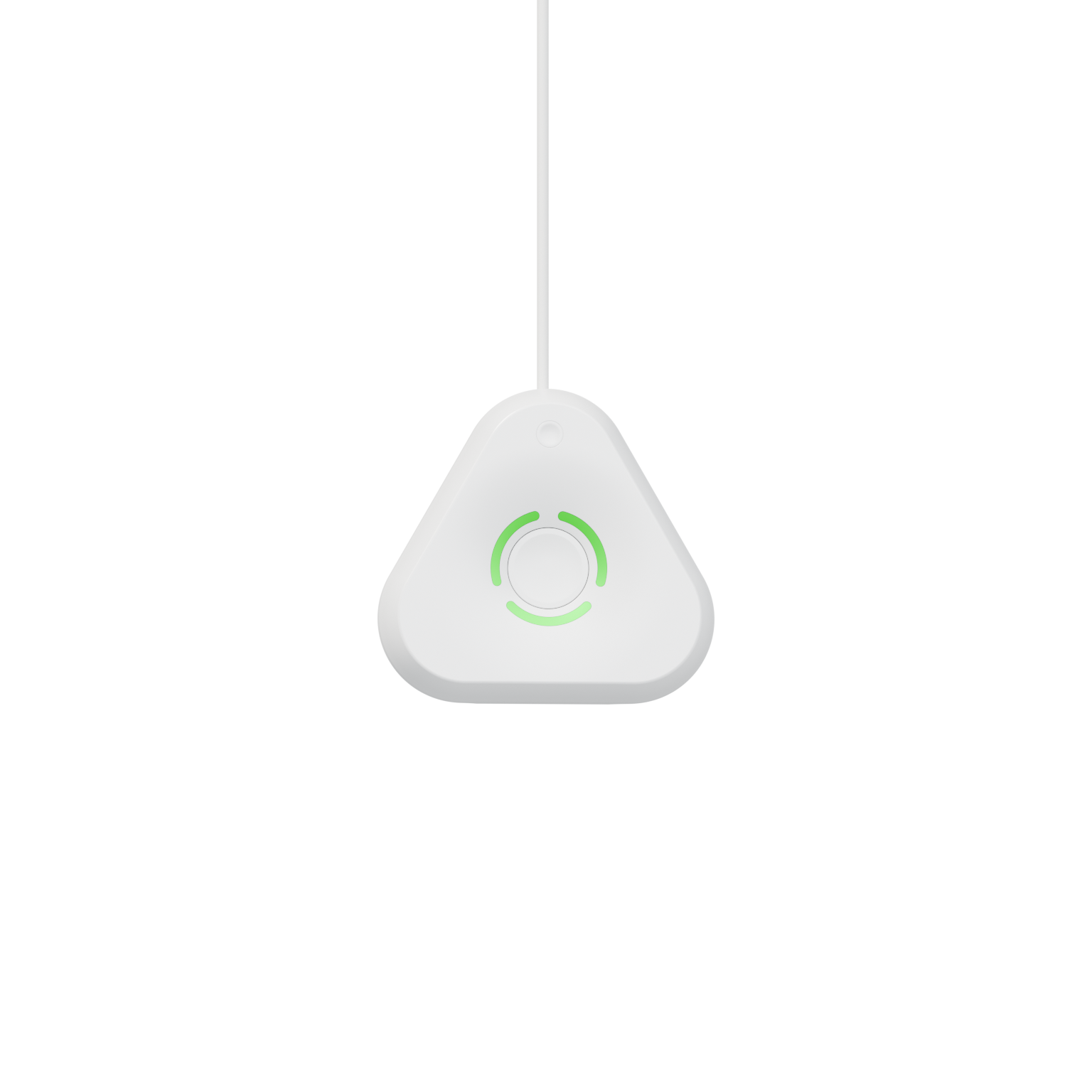
Small transmitters are typically installed in a room, often under the ceiling. They stay in one place - that's why they are called anchors. They periodically send short signals using UWB radio technology.
These signals include the coordinates where the UWB anchors were installed. Phones and other compatible devices receive the signals and measure the differences in their arrival times. Signals from nearby anchors arrive sooner. Signals from more distant anchors take longer.
Using those time differences and the anchors’ coordinates, phones calculate their precise position in space. This technique is called Time Difference of Arrival, or TDoA.
Because phones only listen to the signals and calculate the position locally, the system is privacy-friendly. This is also called a Downlink architecture, or simply DL-TDoA.


UWB INDOOR POSITIONING
On the left, you can see real footage of position and heading estimates computed on a phone using Downlink TDoA. The avatar shows the phone’s position and orientation, while the blue trail traces its movement over the past five seconds.
Four UWB anchors are installed in the corners of this 5 m × 4.3 m room. The phone receives their signals and calculates its position locally. The desk and chair are drawn to scale, and the coordinates below the room update as the person moves.
This footage demonstrates the precise indoor positioning made possible by UWB DL-TDoA.

DOWNLINK TDOA USE CASES
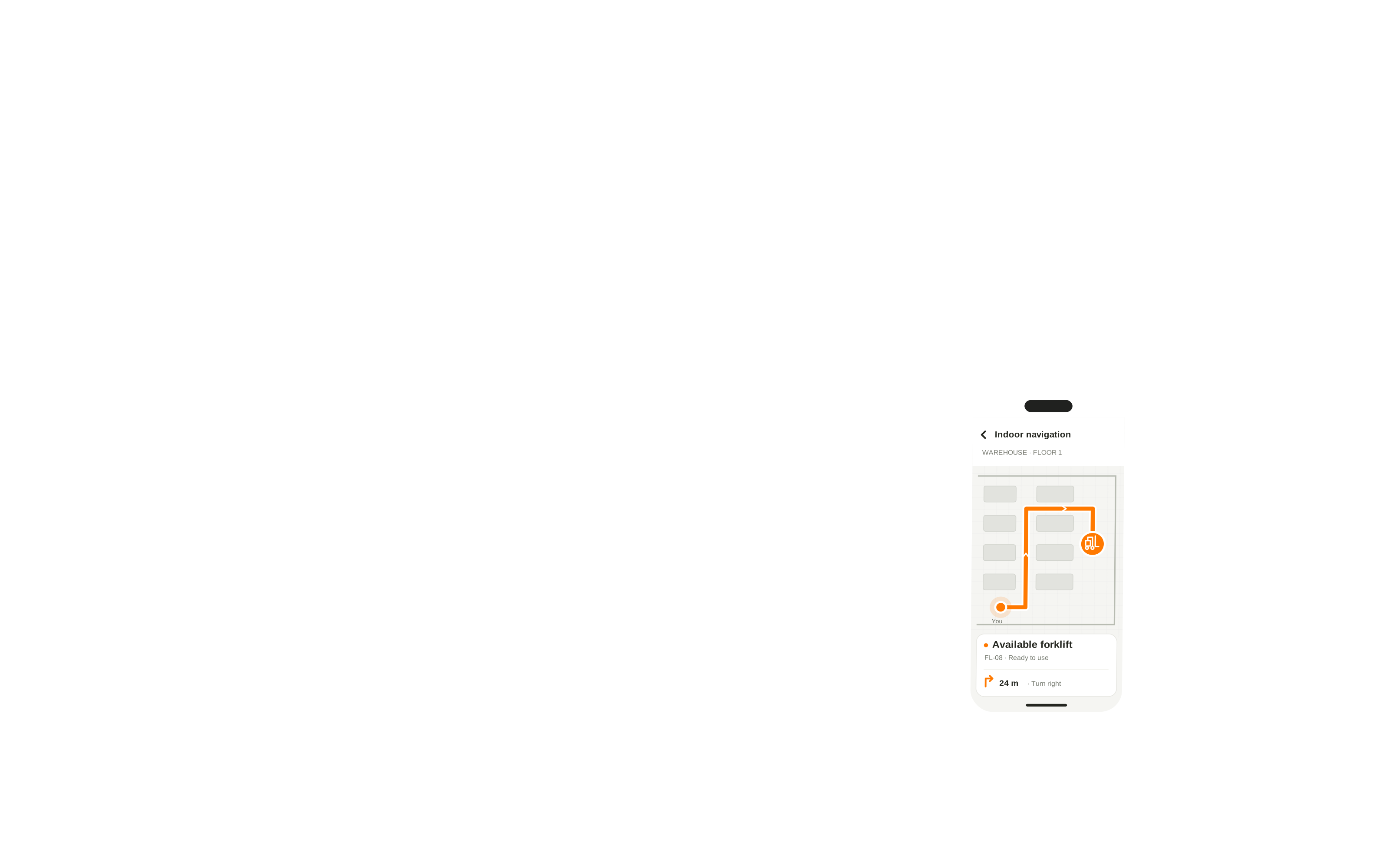
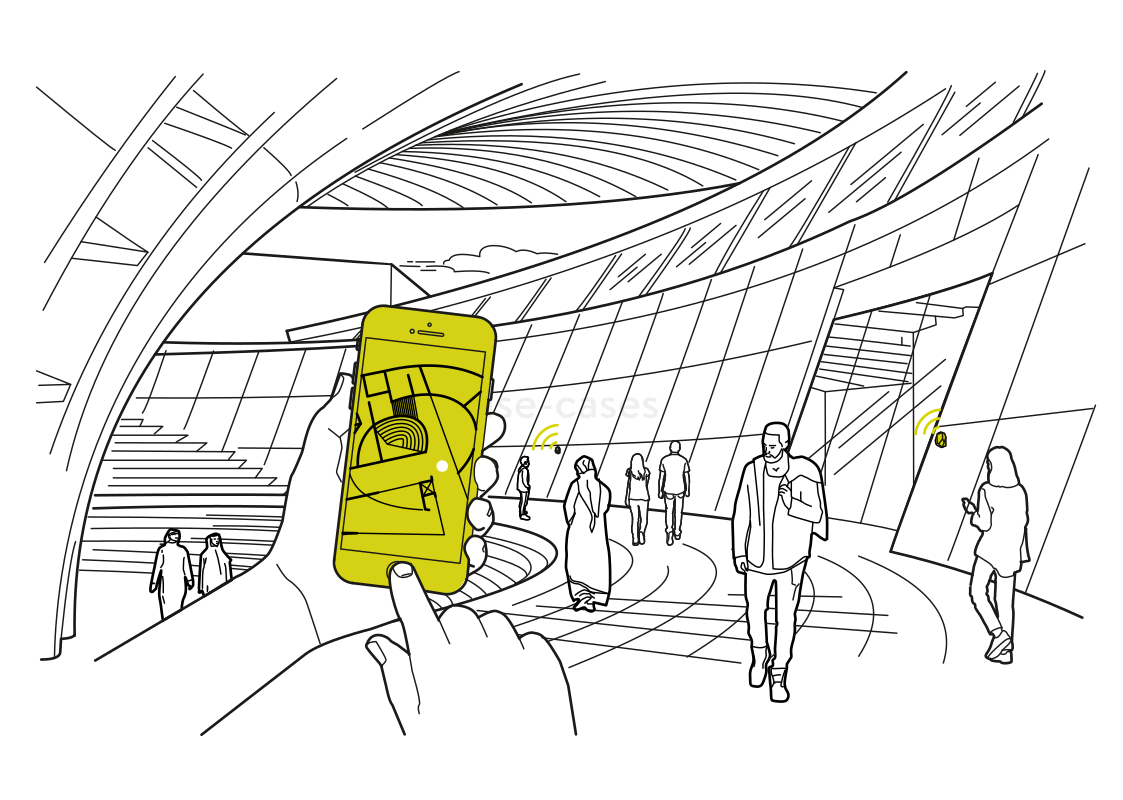
This is simply indoor GPS and there are many applications where precise indoor location is needed. These could be consumer applications that deliver magical experiences or industrial applications increasing productivity or safety.
 Find your way through the terminalRead more
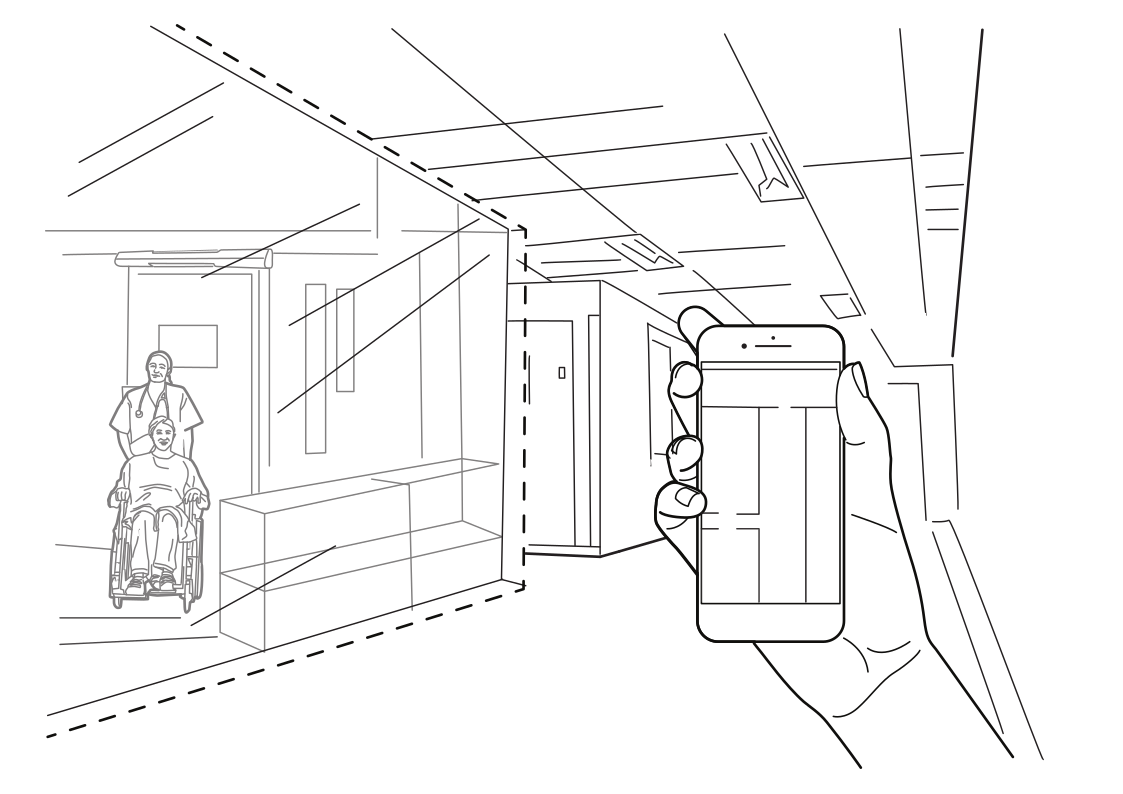 Directions to your appointmentRead more
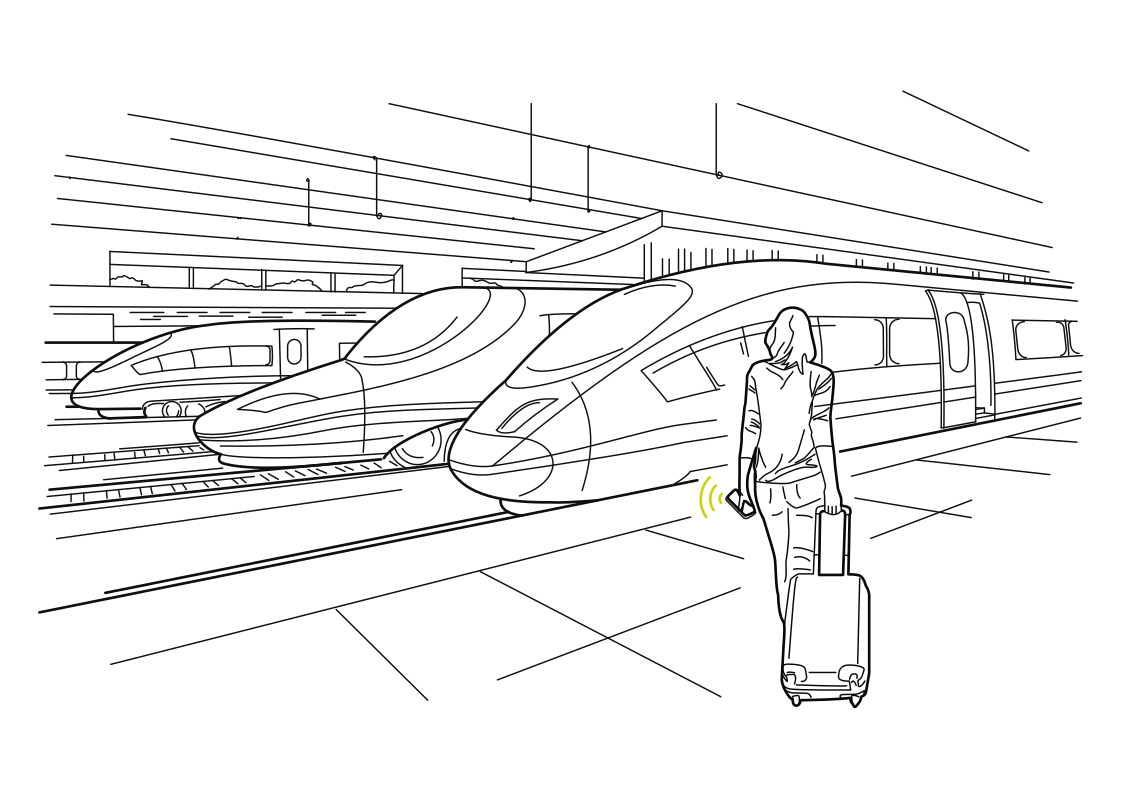 Find your trainRead more
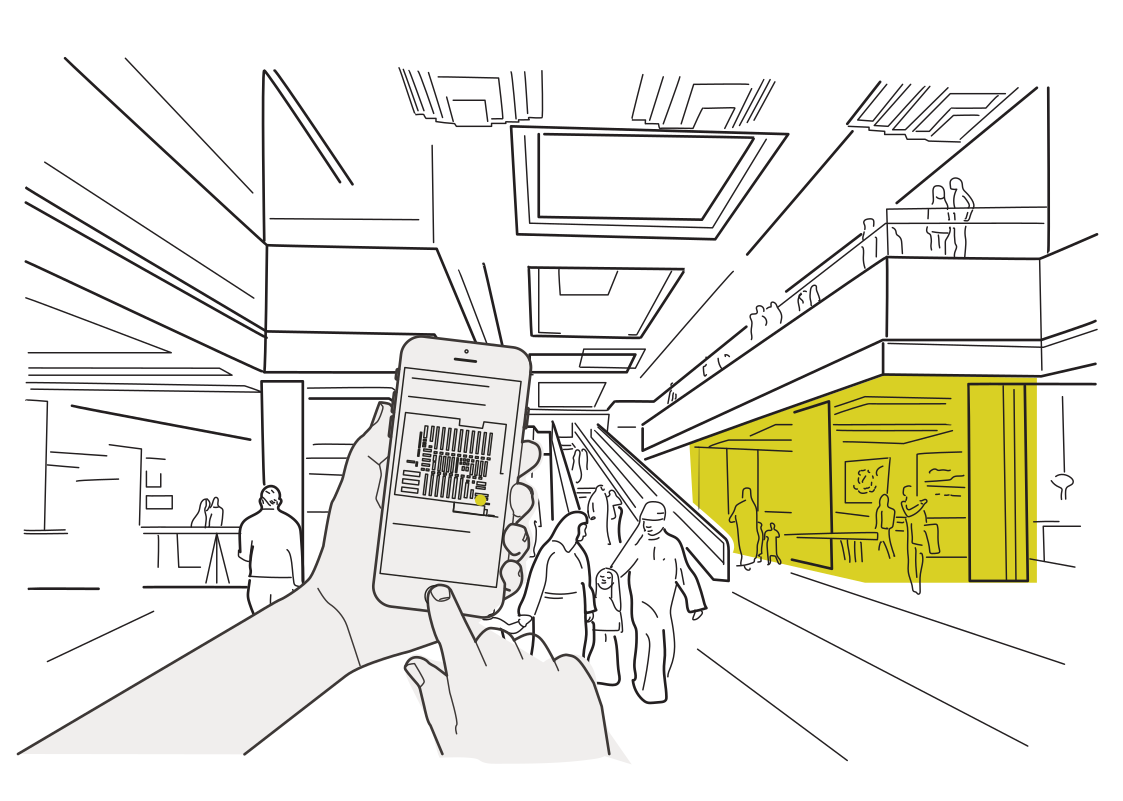 Find the store you came forRead more
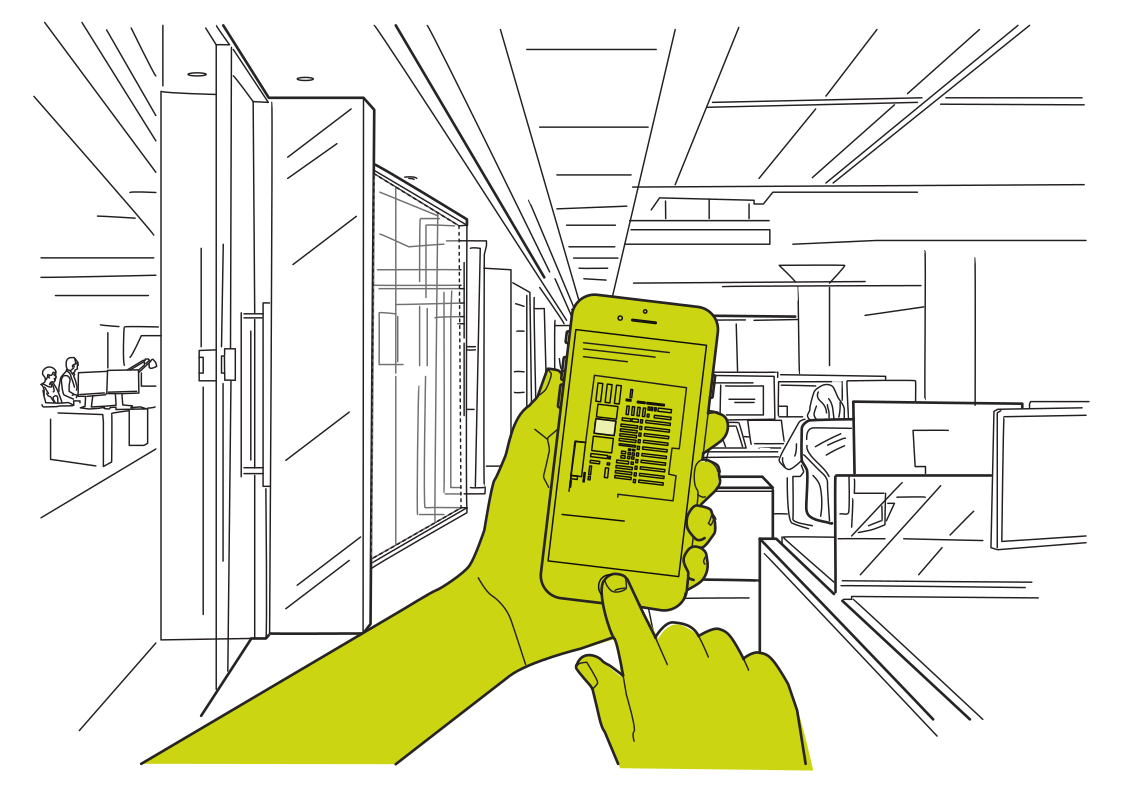 Find your way around the officeRead more
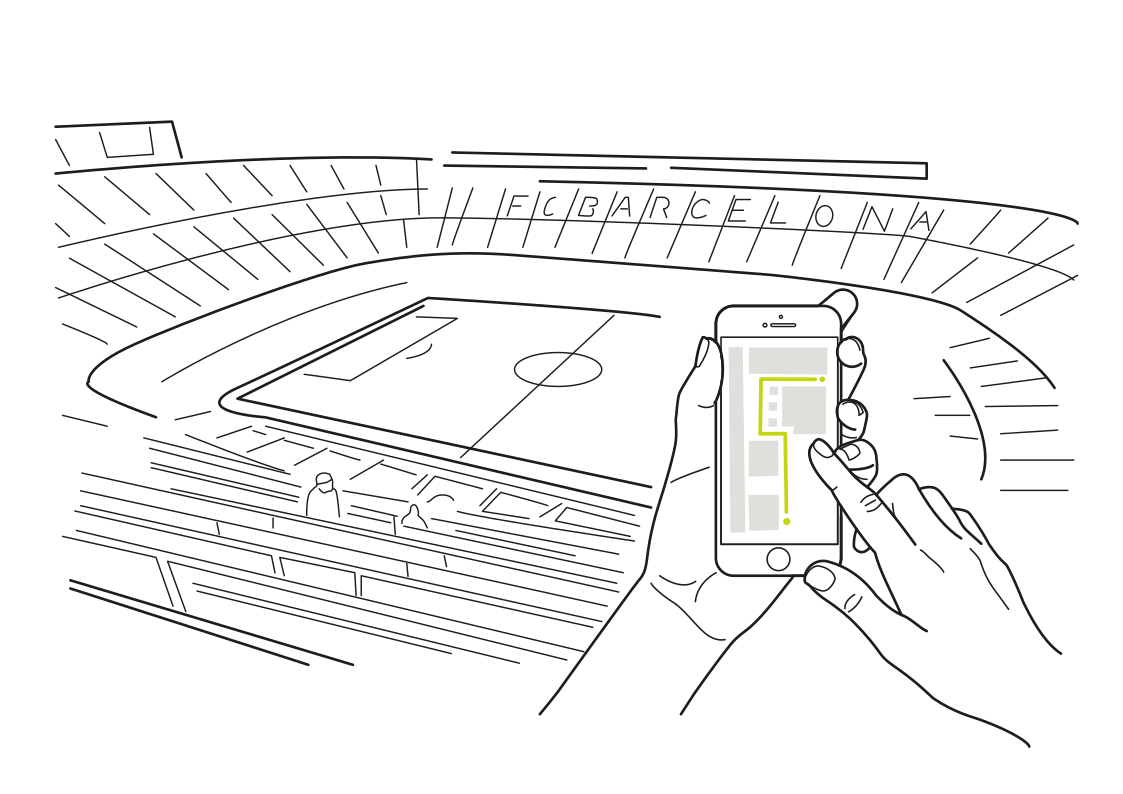 Find your place in the stadiumRead more
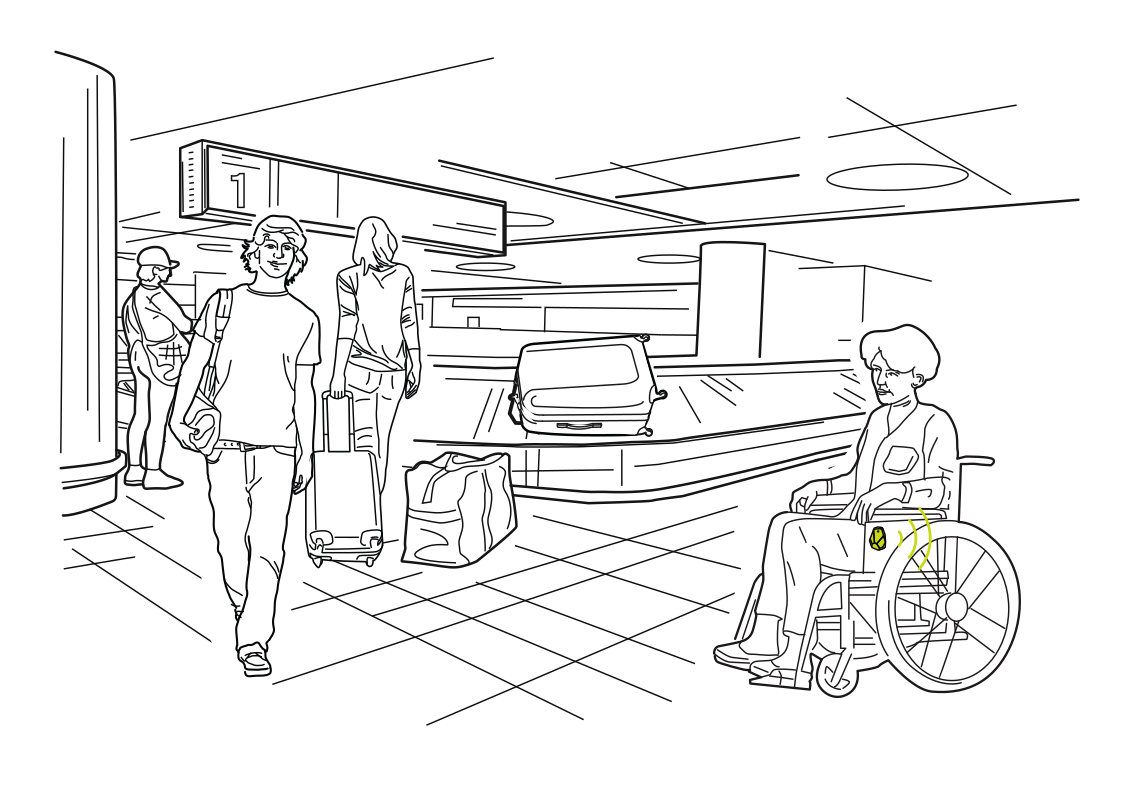 An easier route through arrivalsRead more
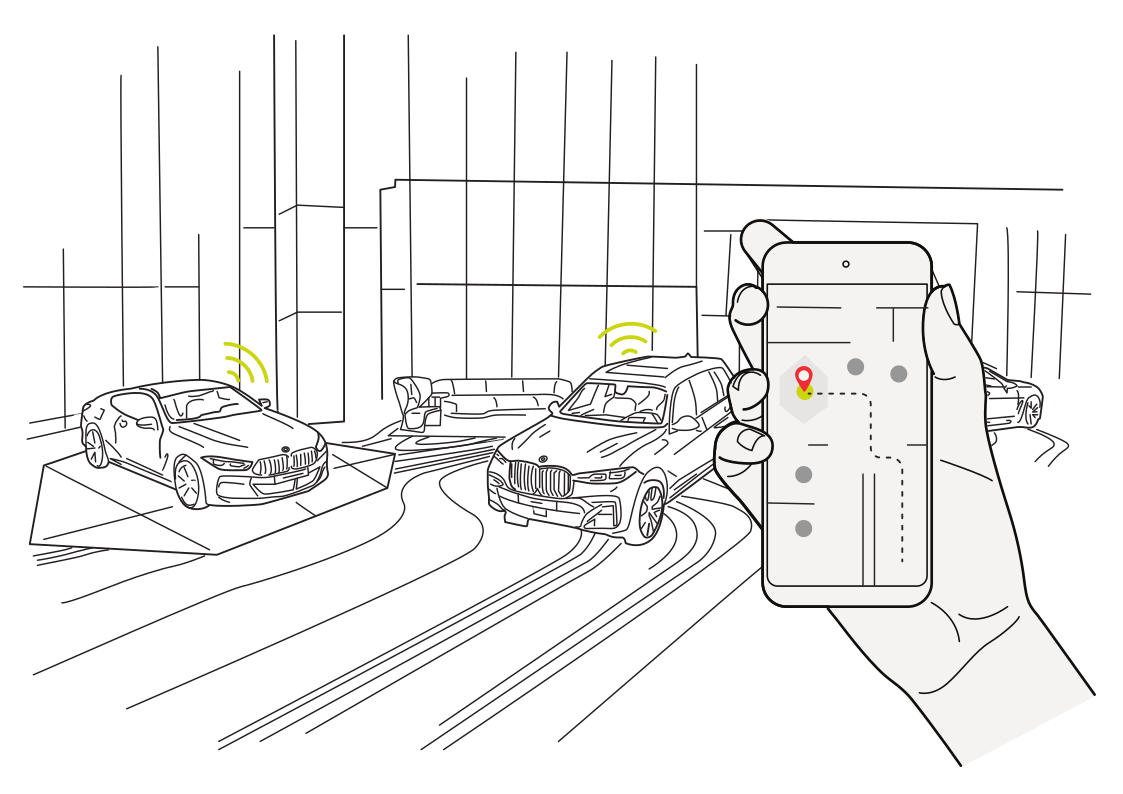 Back to your parked carRead more
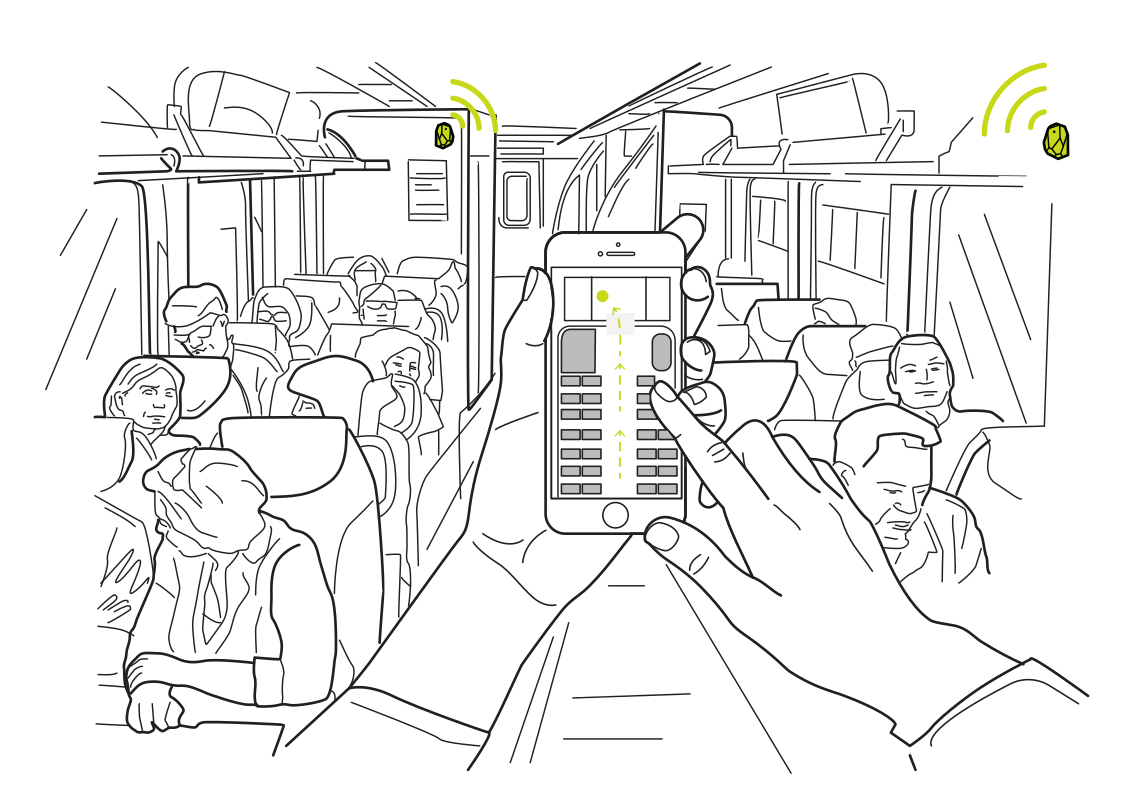 Straight to your seatRead more
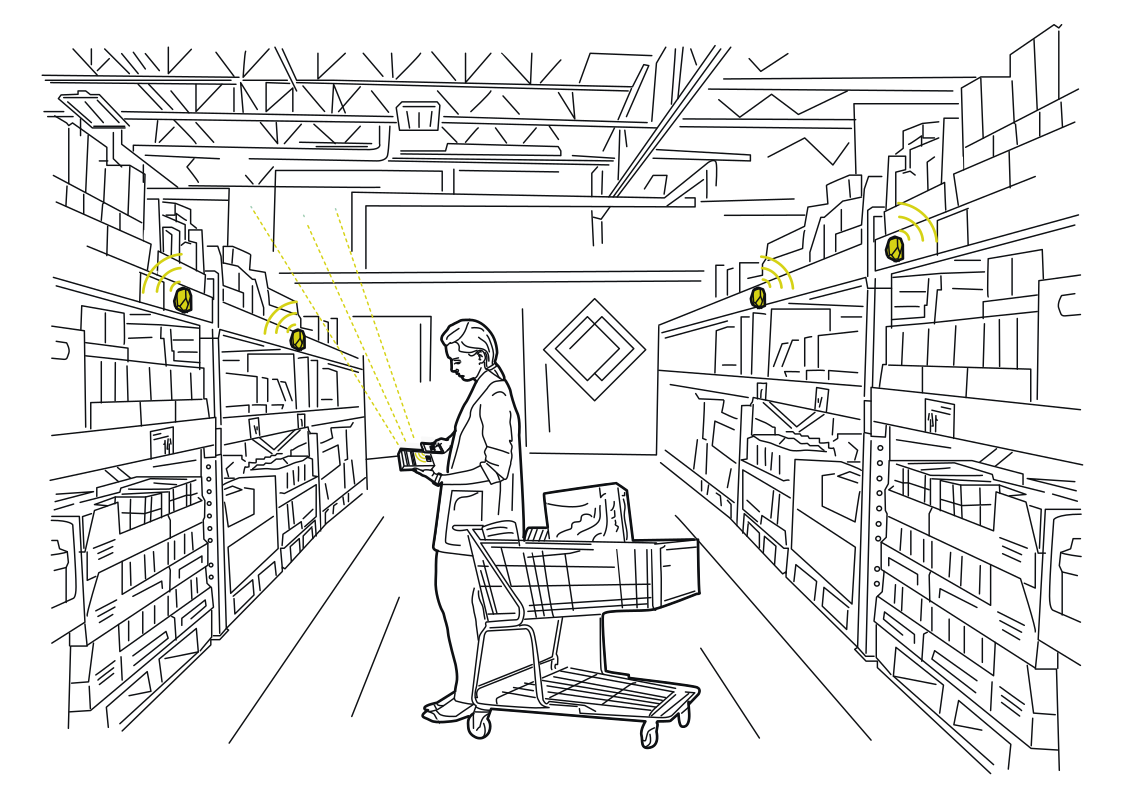 Guide shoppers to the shelfRead more
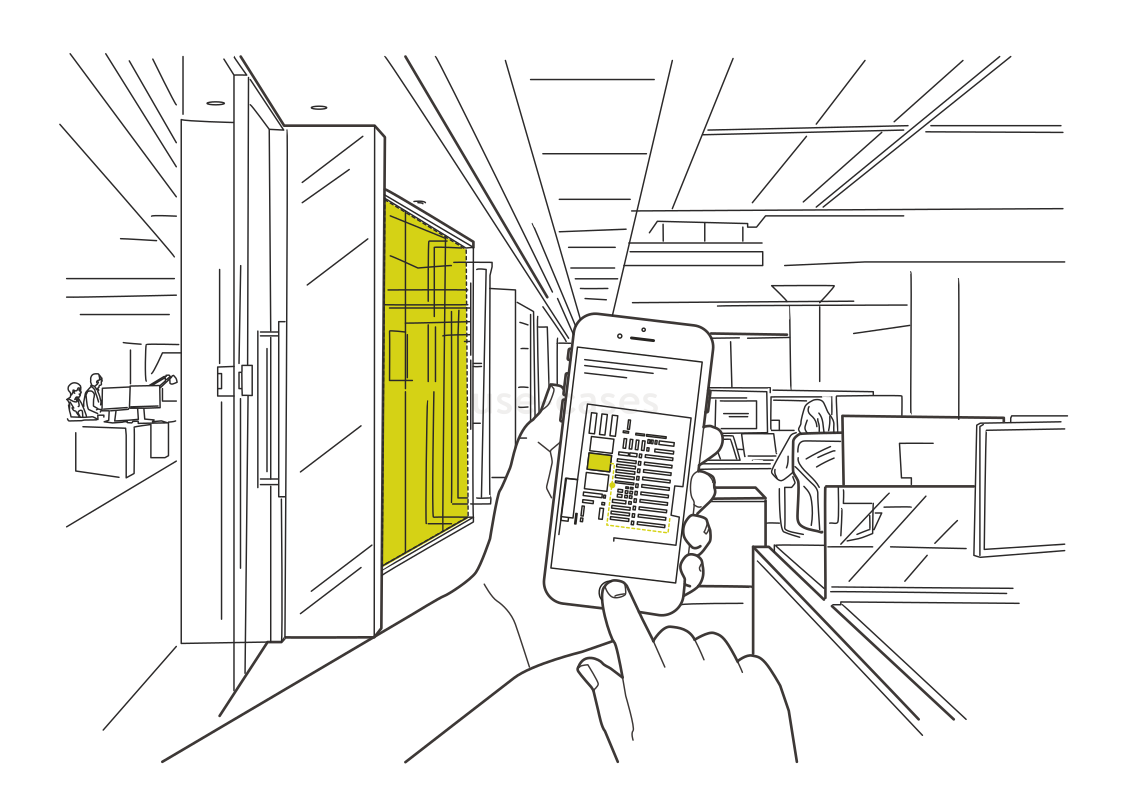 Find the meeting room doorRead more
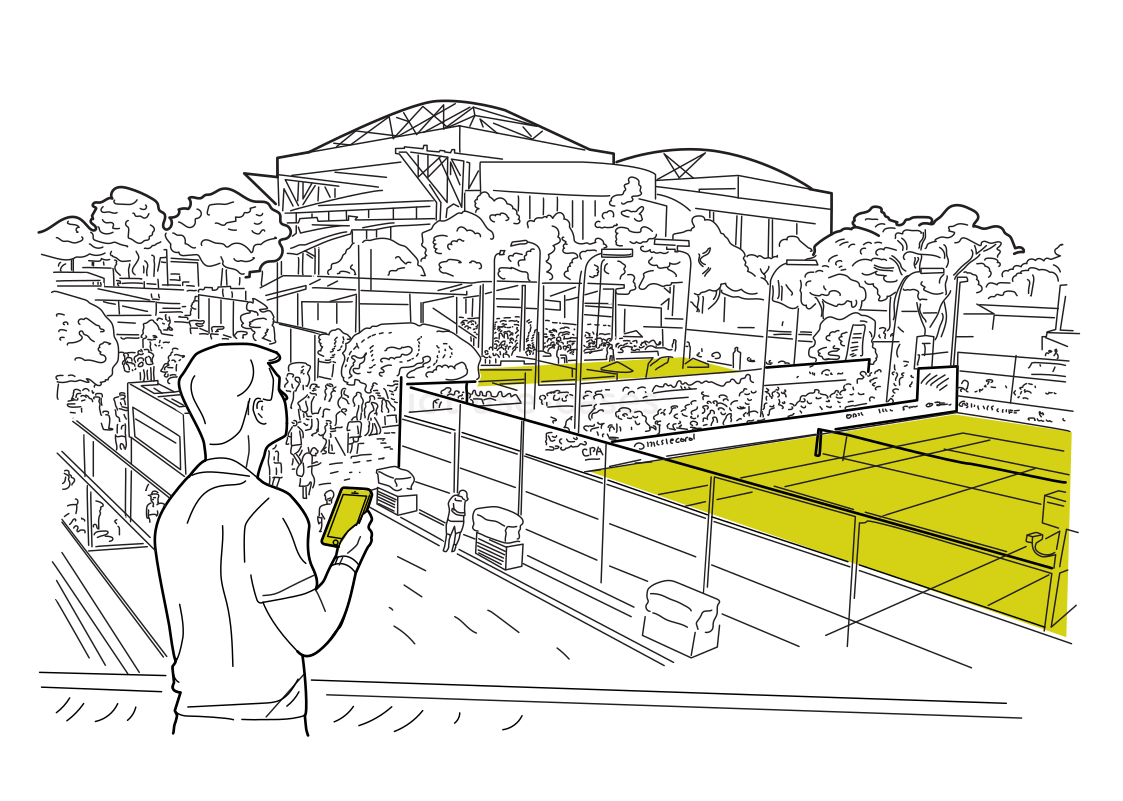 Find your court or seatRead more
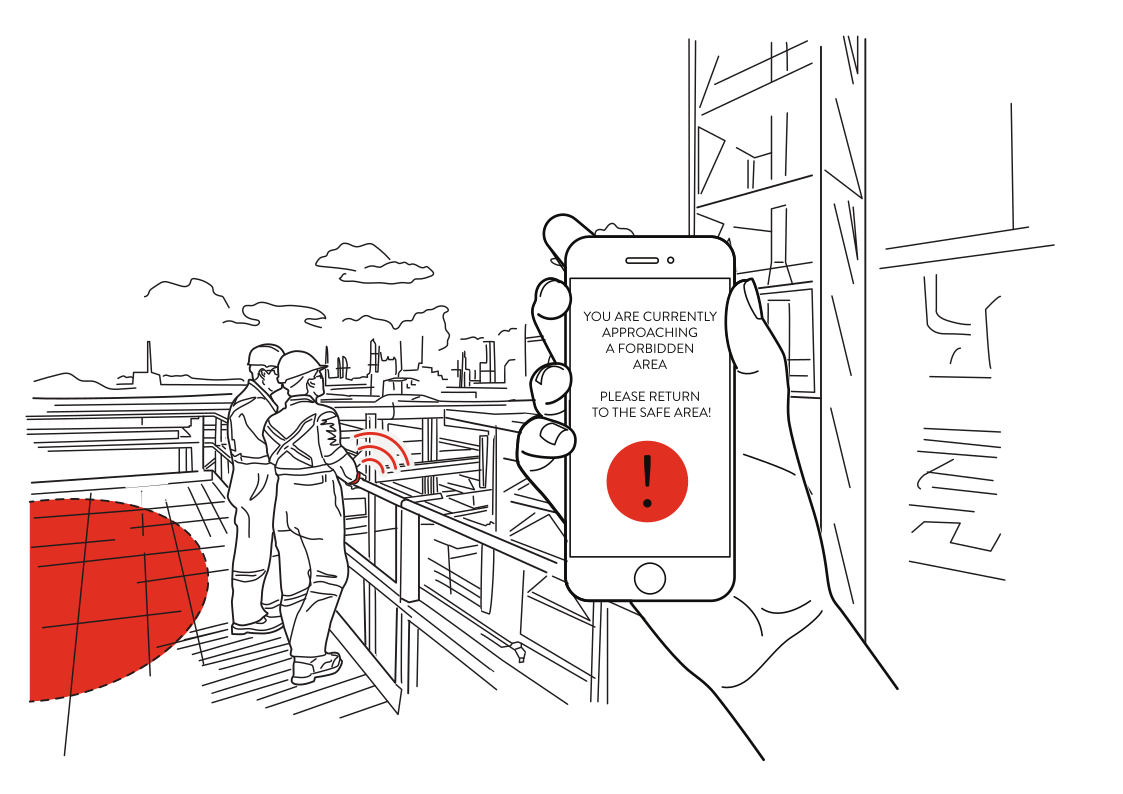 Keep work zones visibleRead more
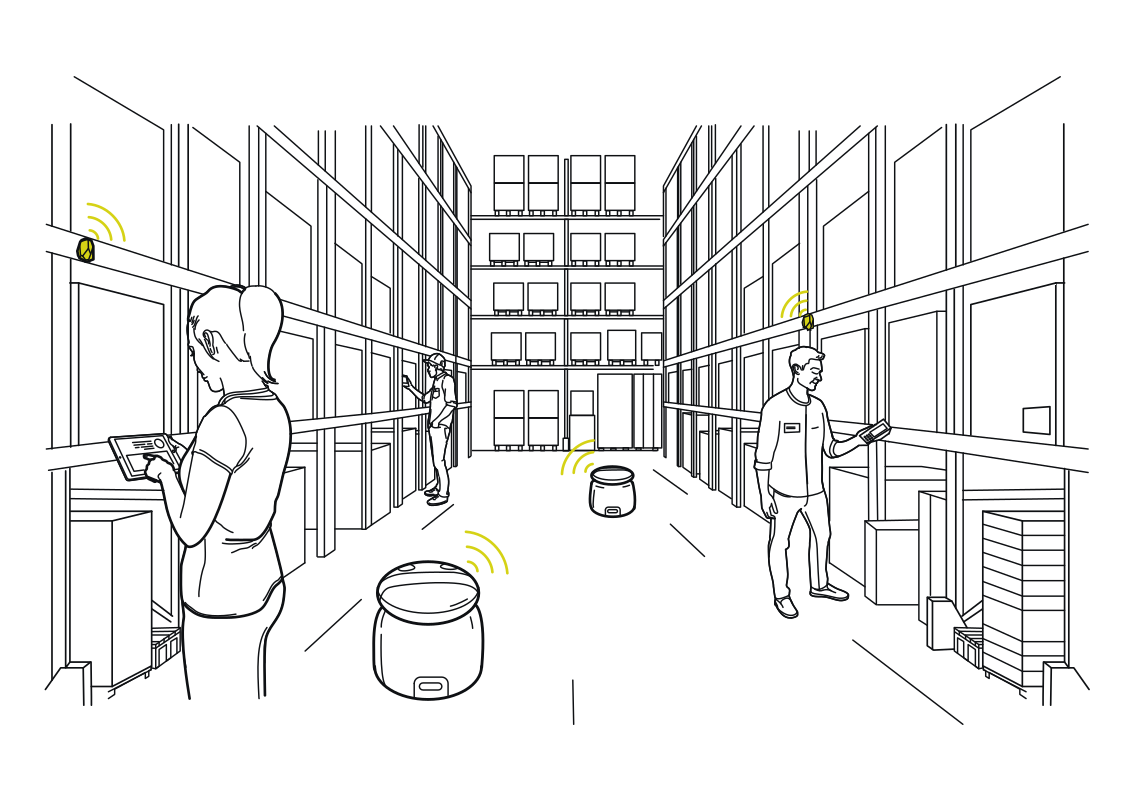 Location for people and robotsRead more
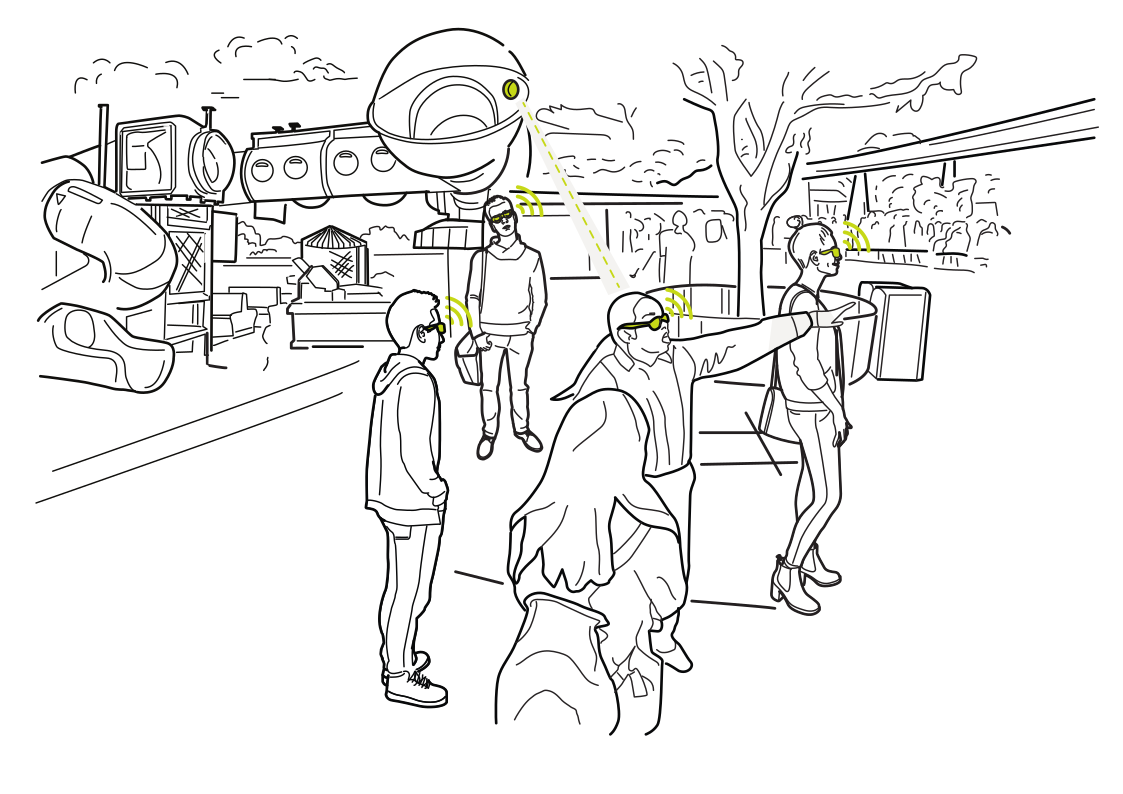 A guide for every adventureRead more
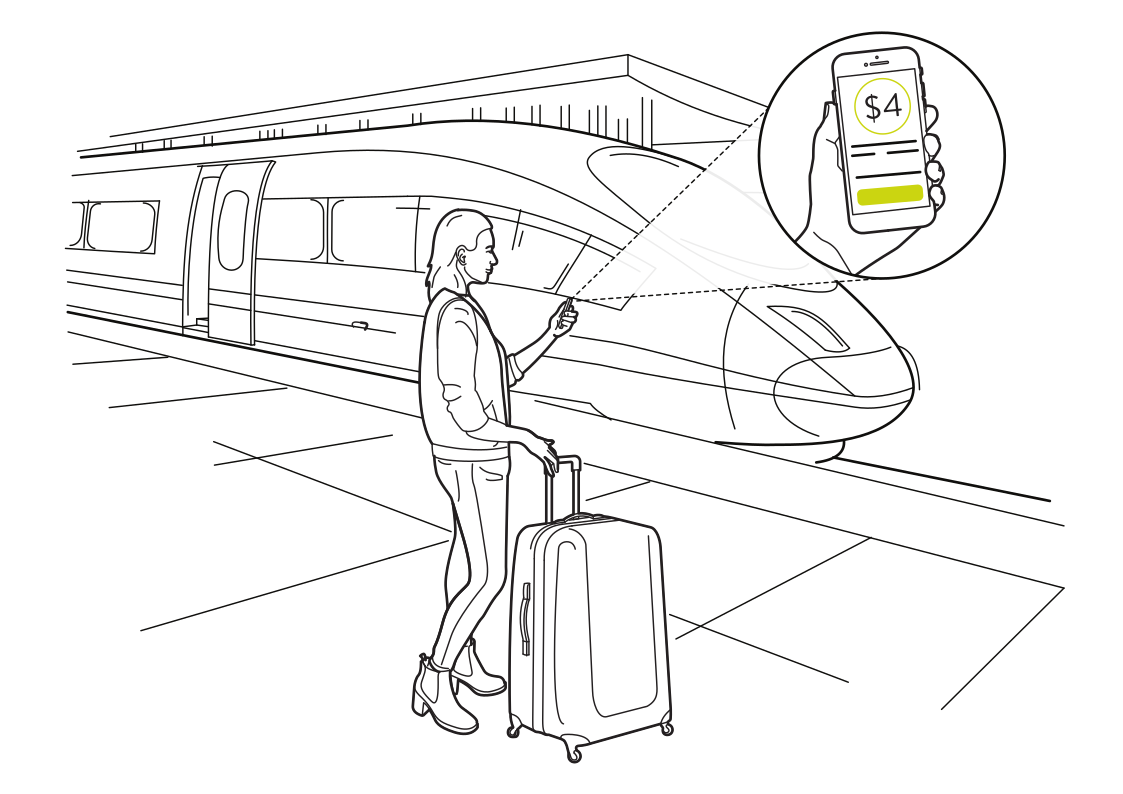 Board, ride, and goRead more
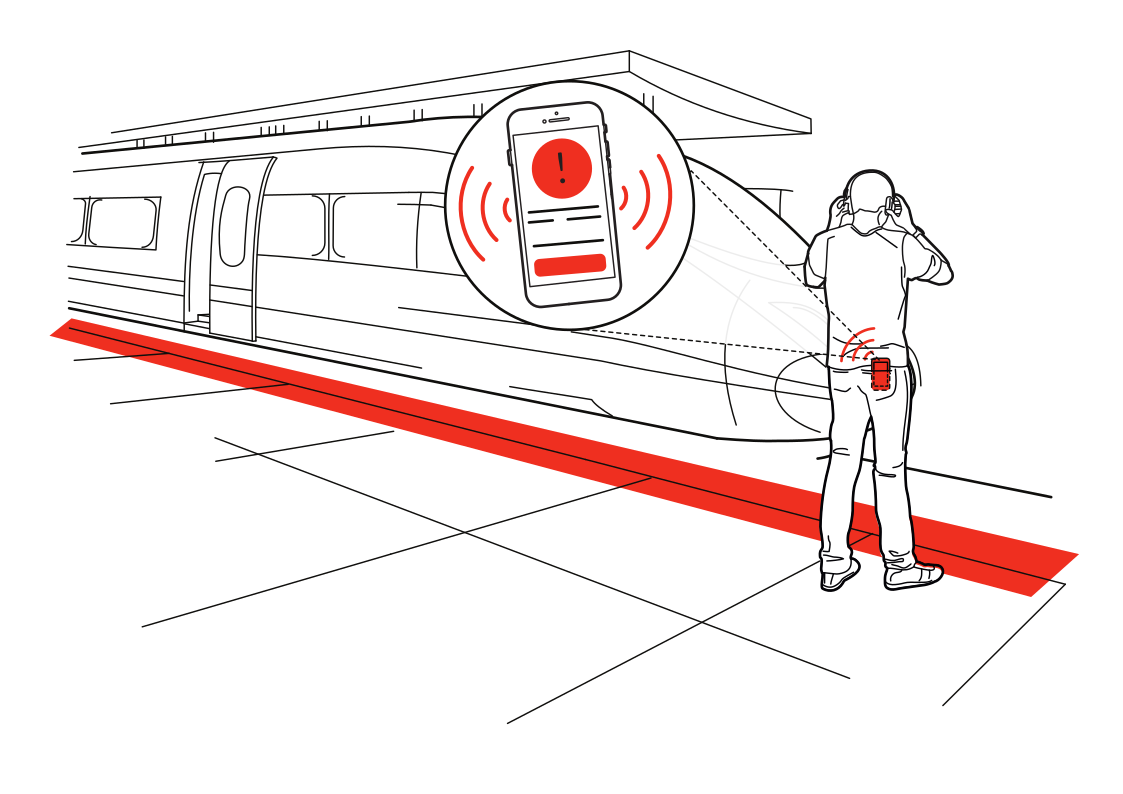 A reminder at the platform edgeRead more
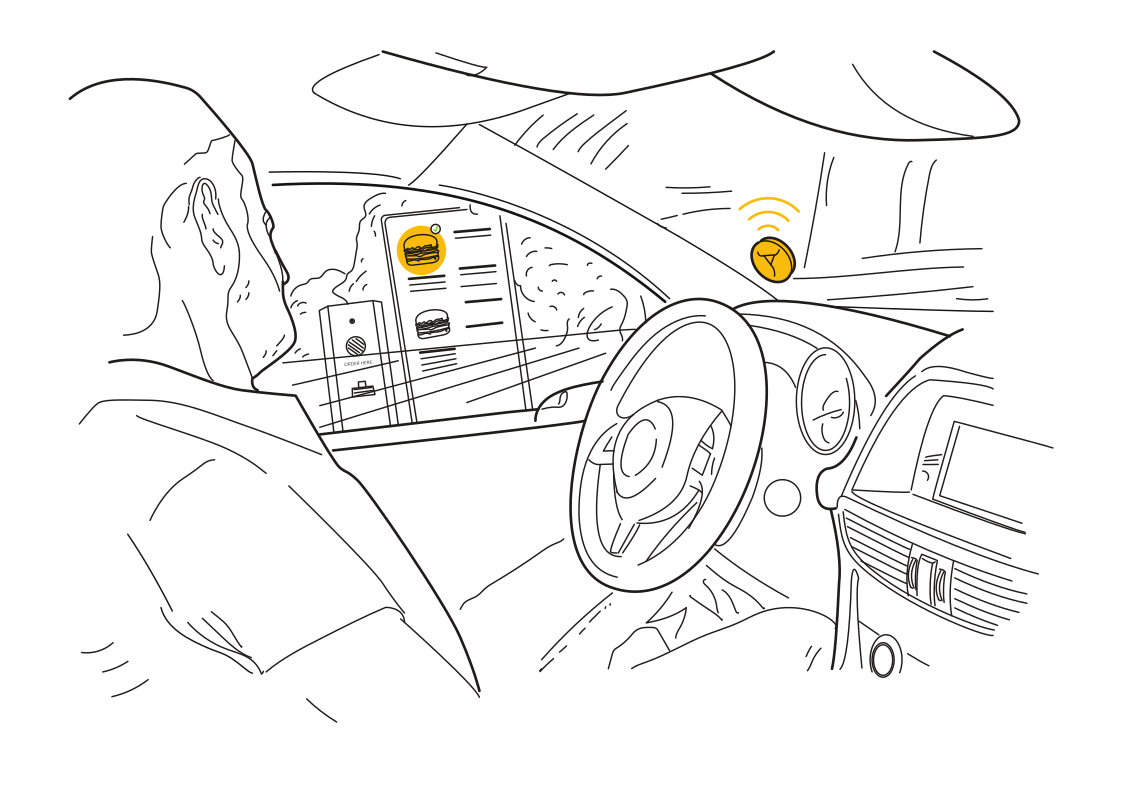 Your order, ready on arrivalRead more
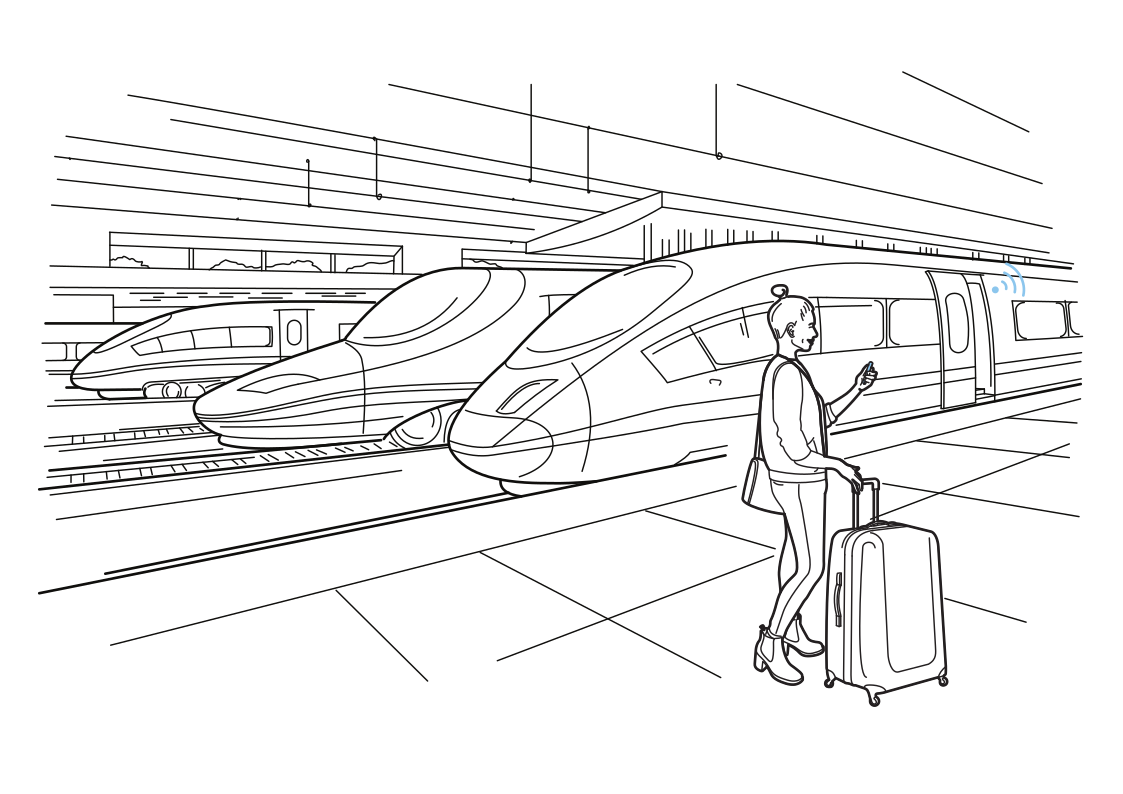 Know which train to boardRead more
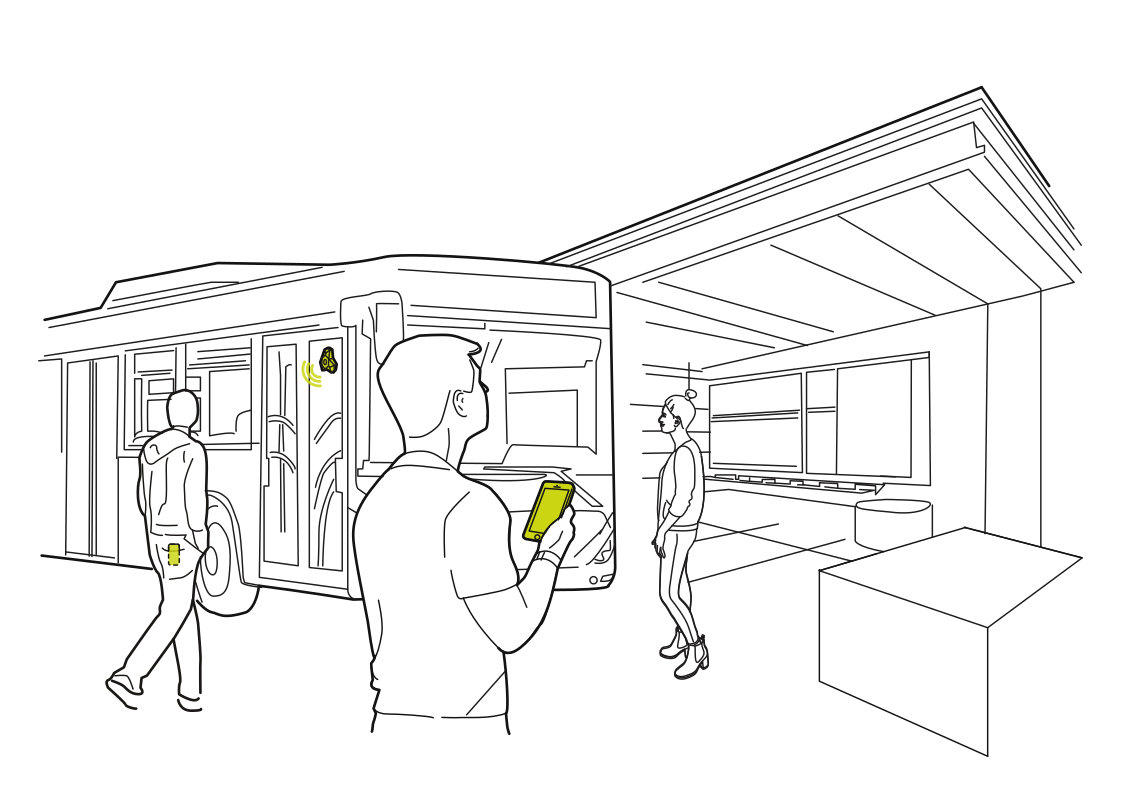 Find the right busRead more
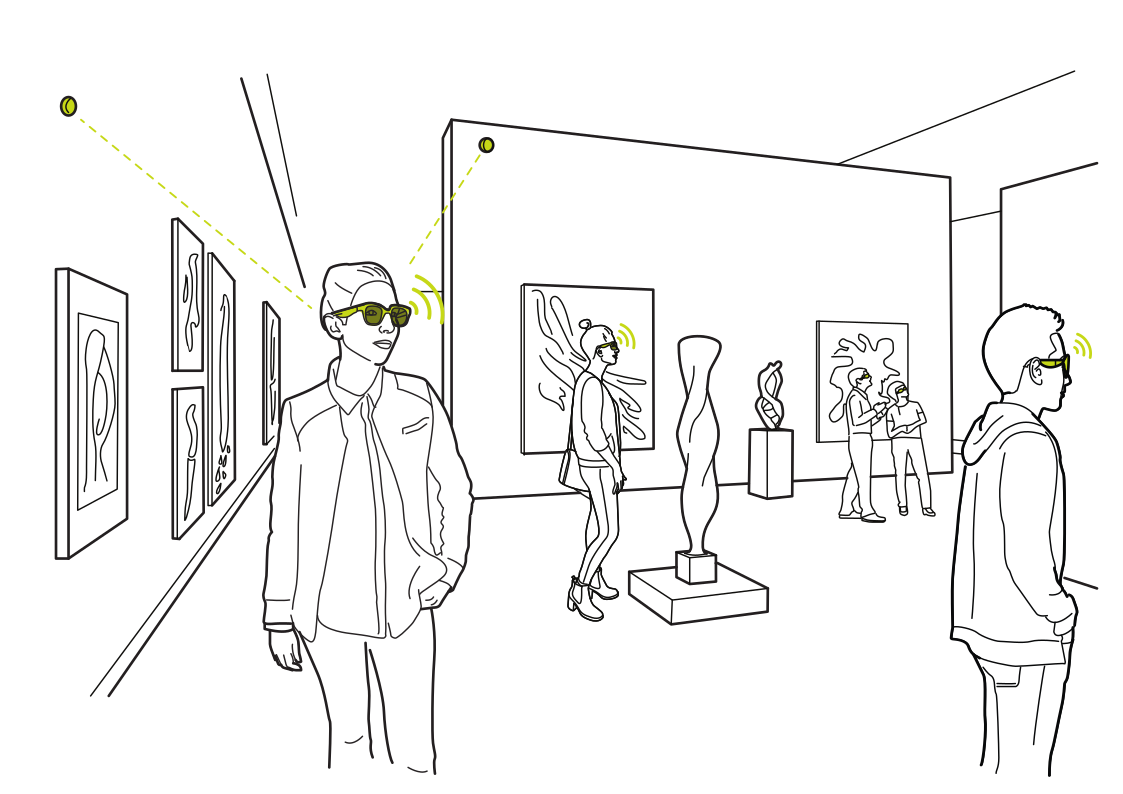 Bring exhibits into viewRead more
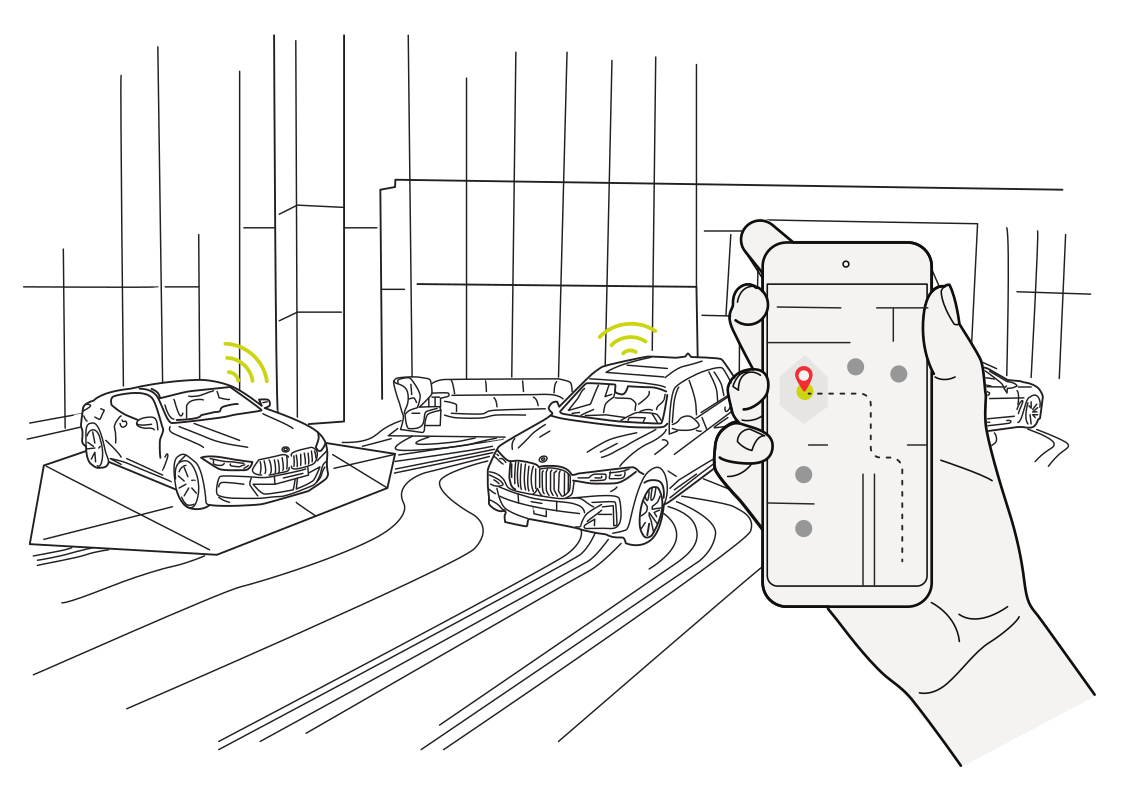 Remember your parking spotRead more
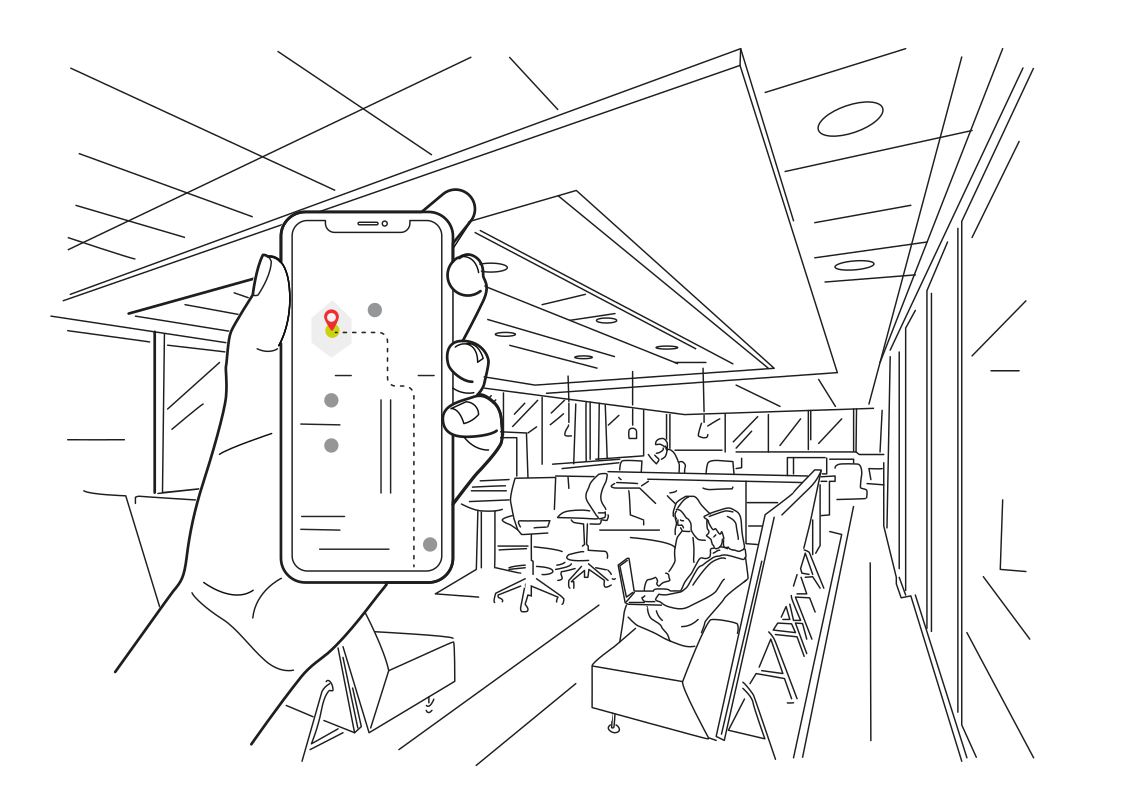 Directions through a new workplaceRead more
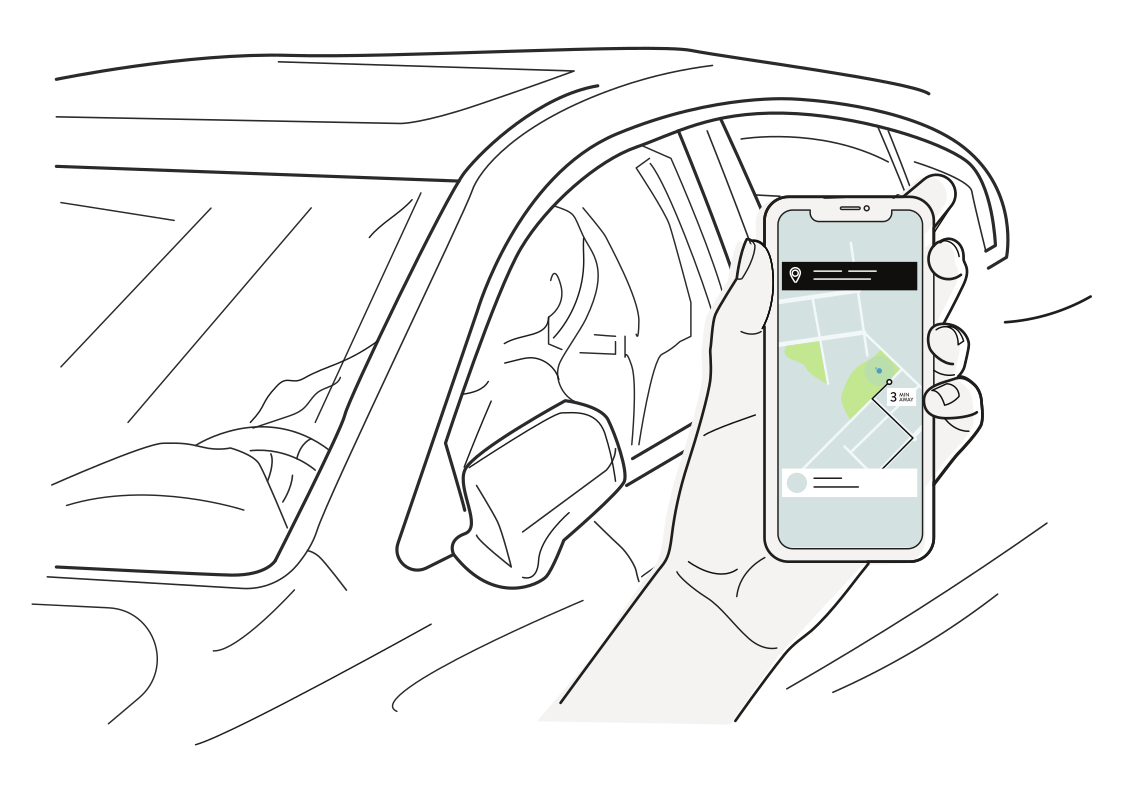 Find your pickup vehicleRead more
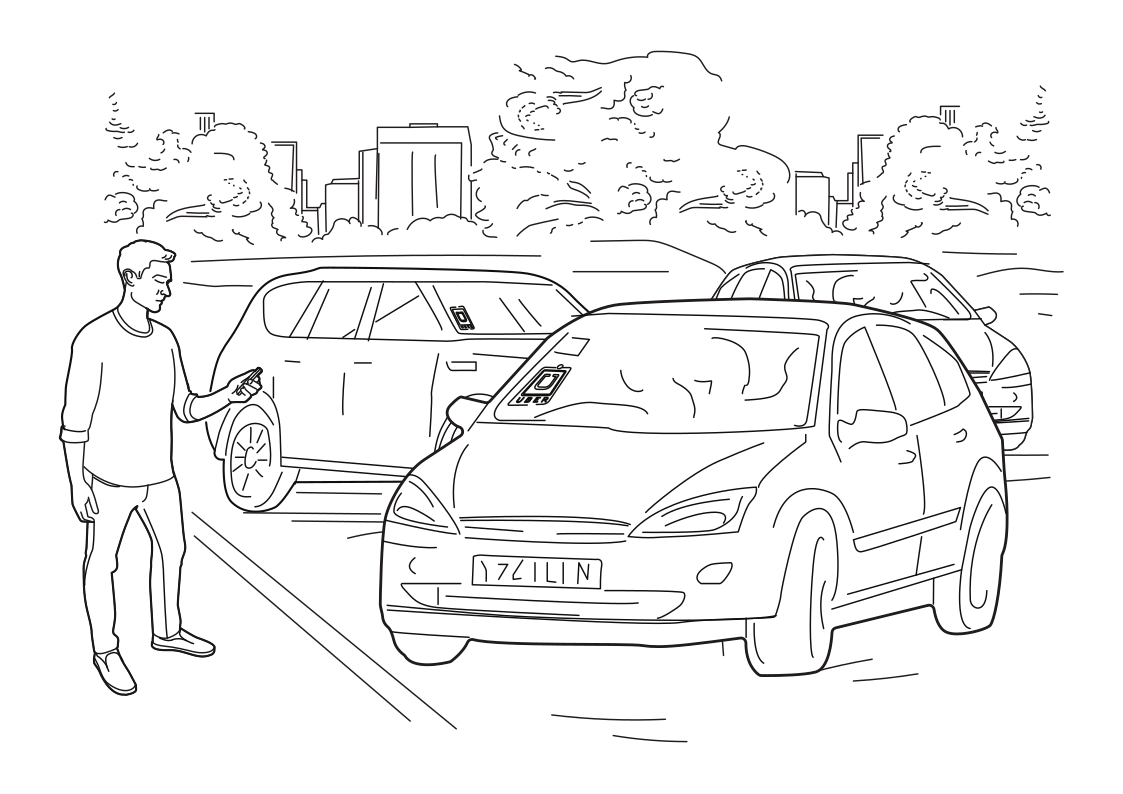 Meet your ride with confidenceRead more
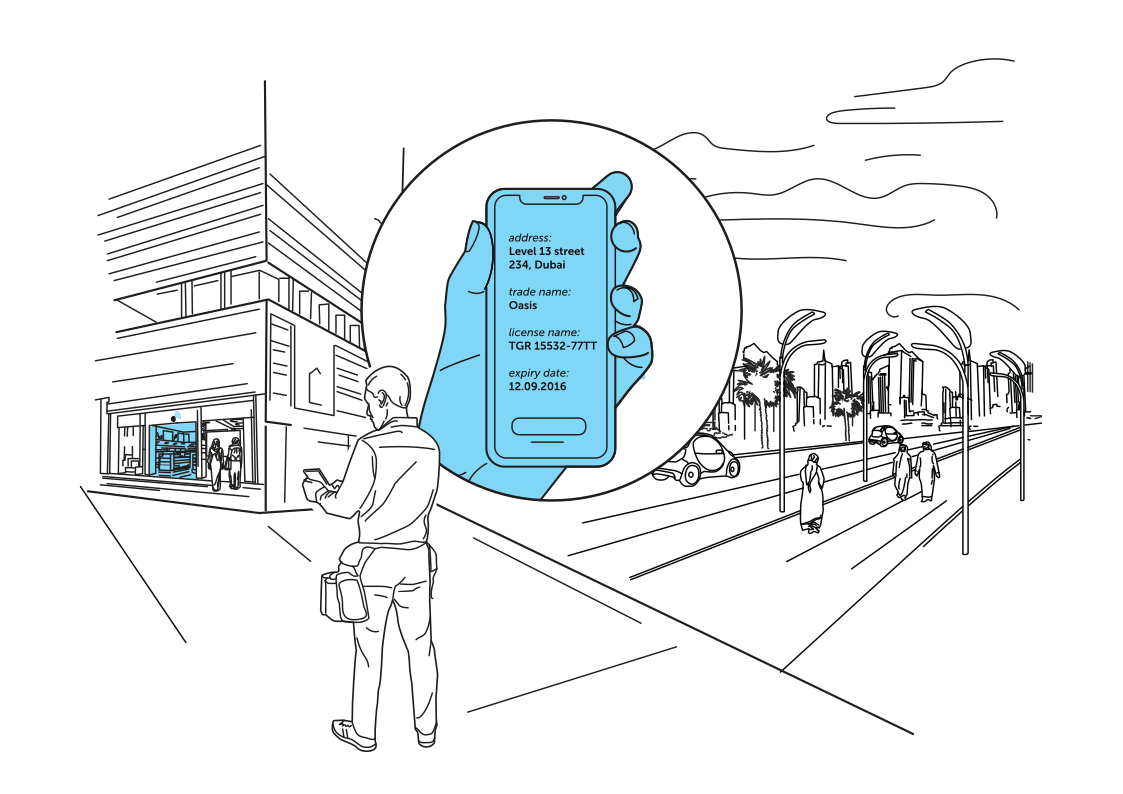 Useful information at the entranceRead more
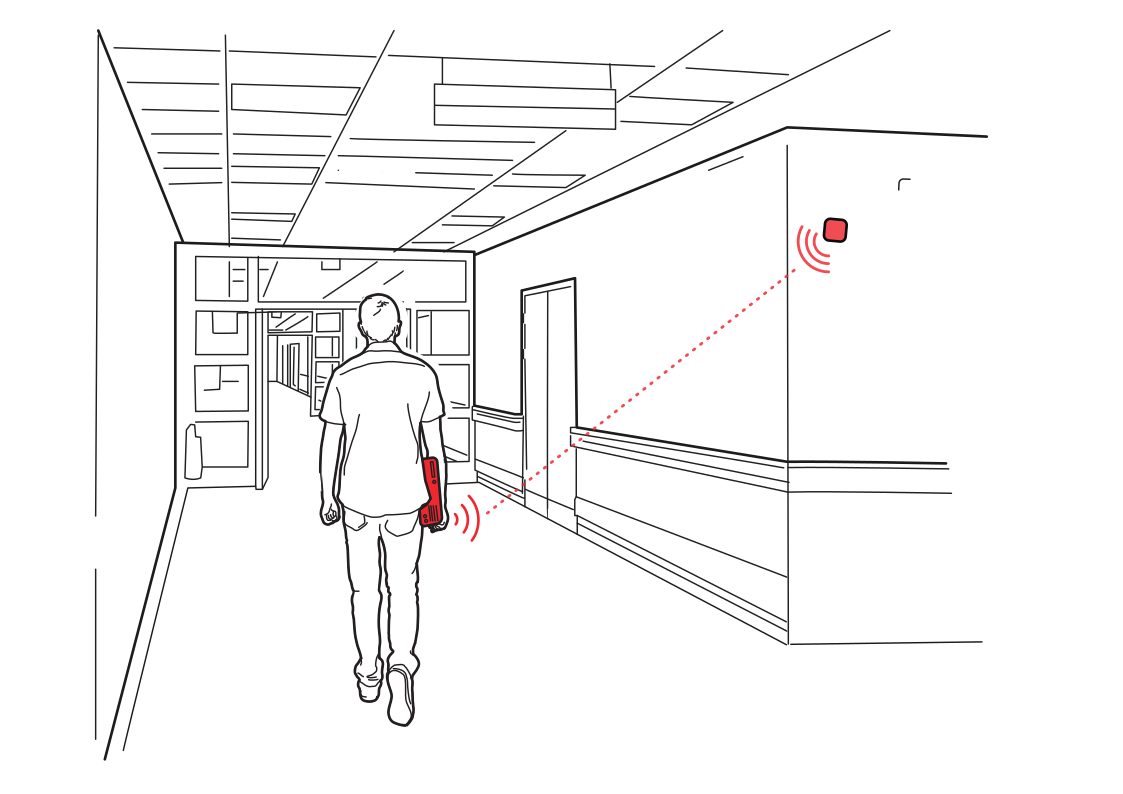 A prompt at the right doorwayRead more
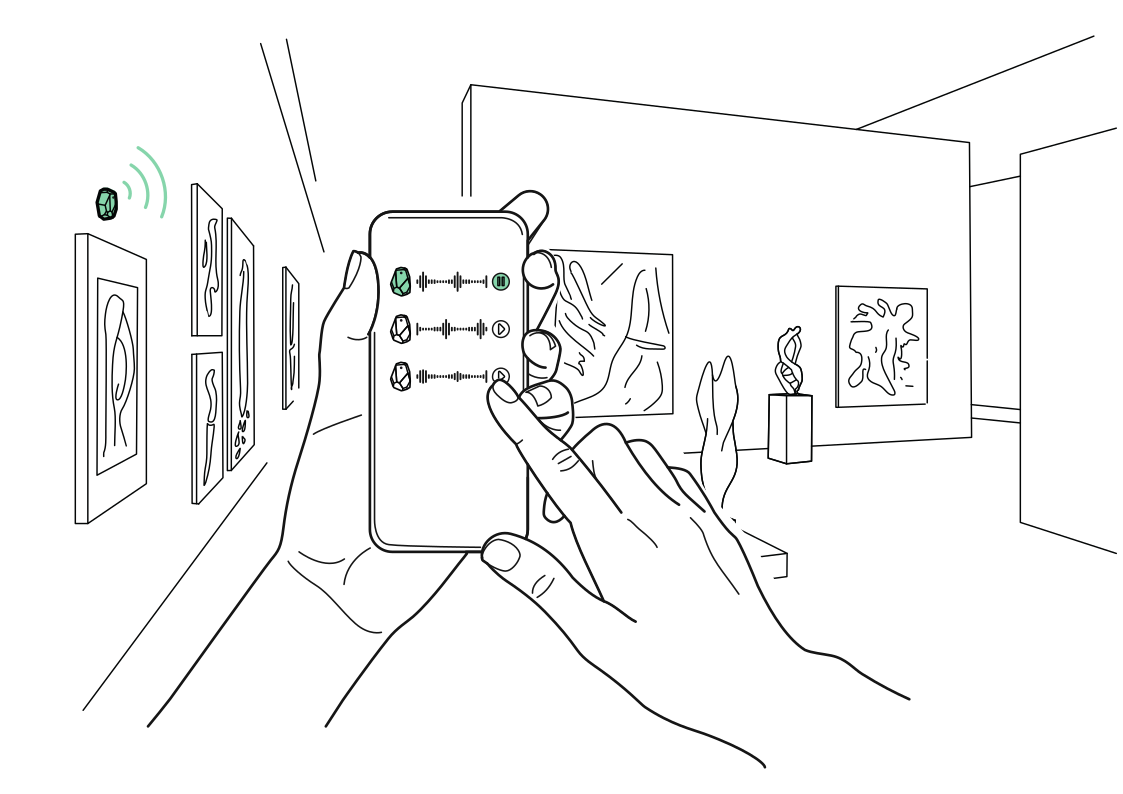 A soundtrack for each galleryRead more
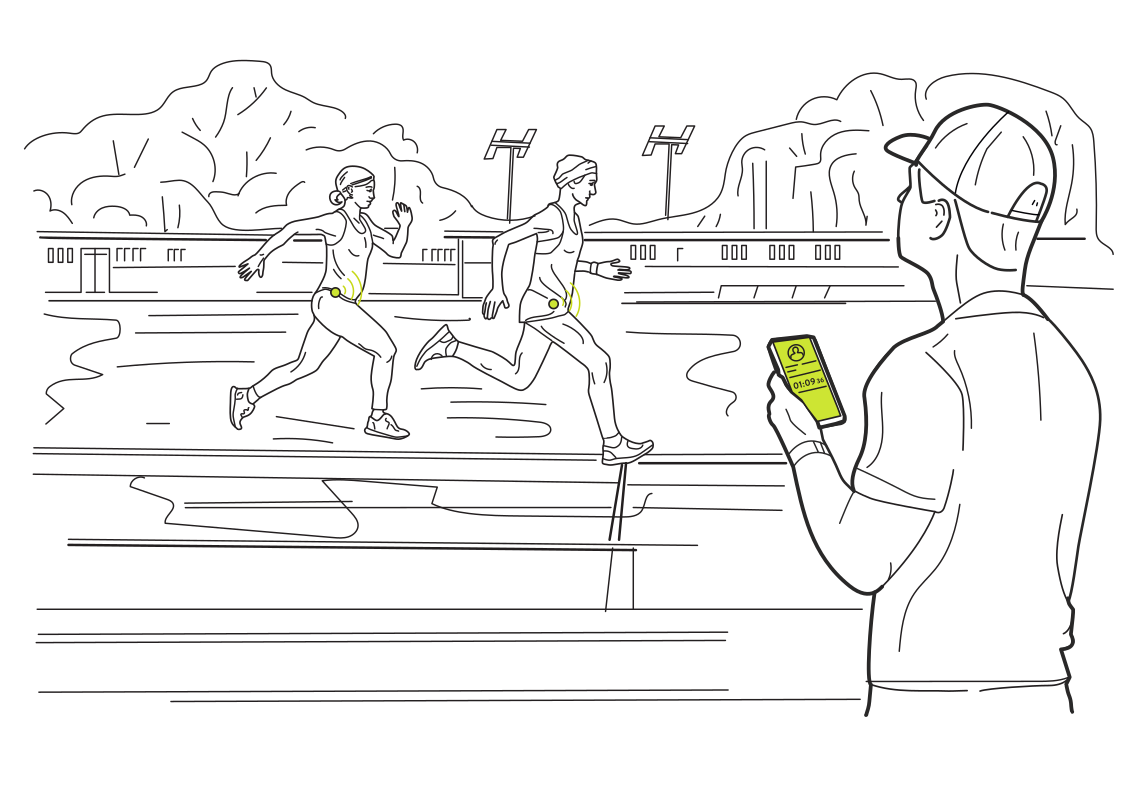 Bring location into trainingRead more
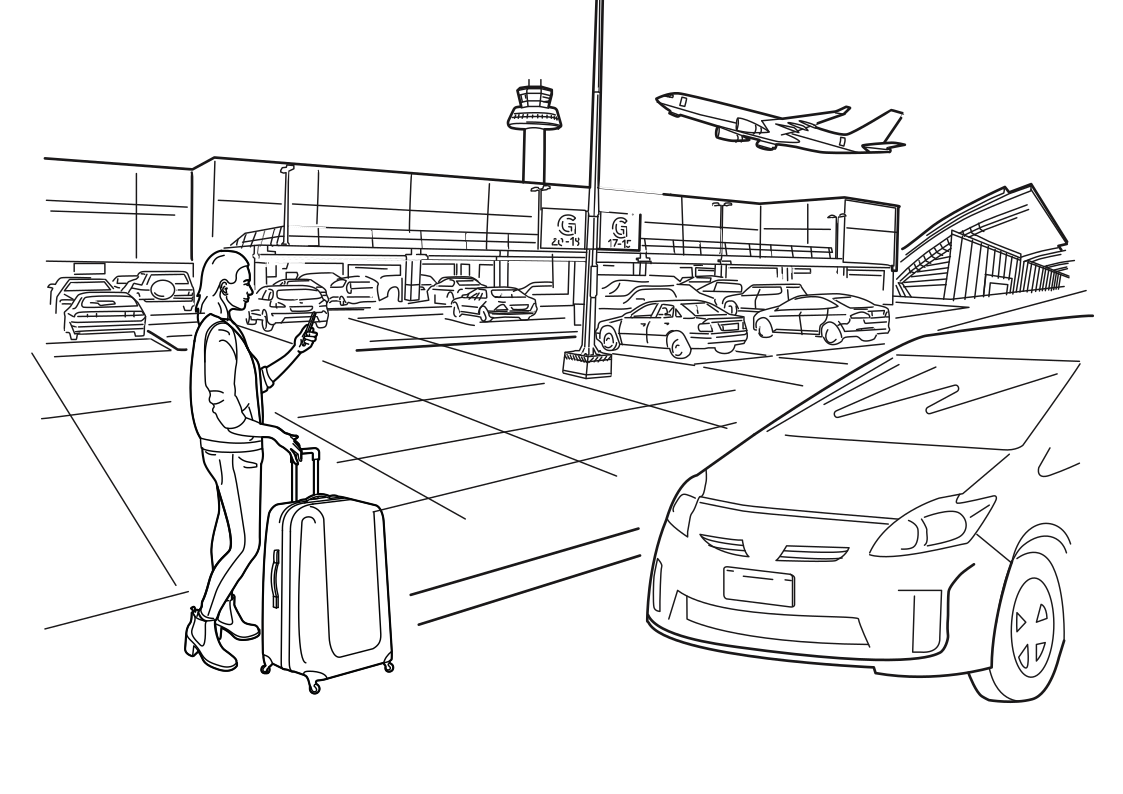 From the terminal to your carRead more
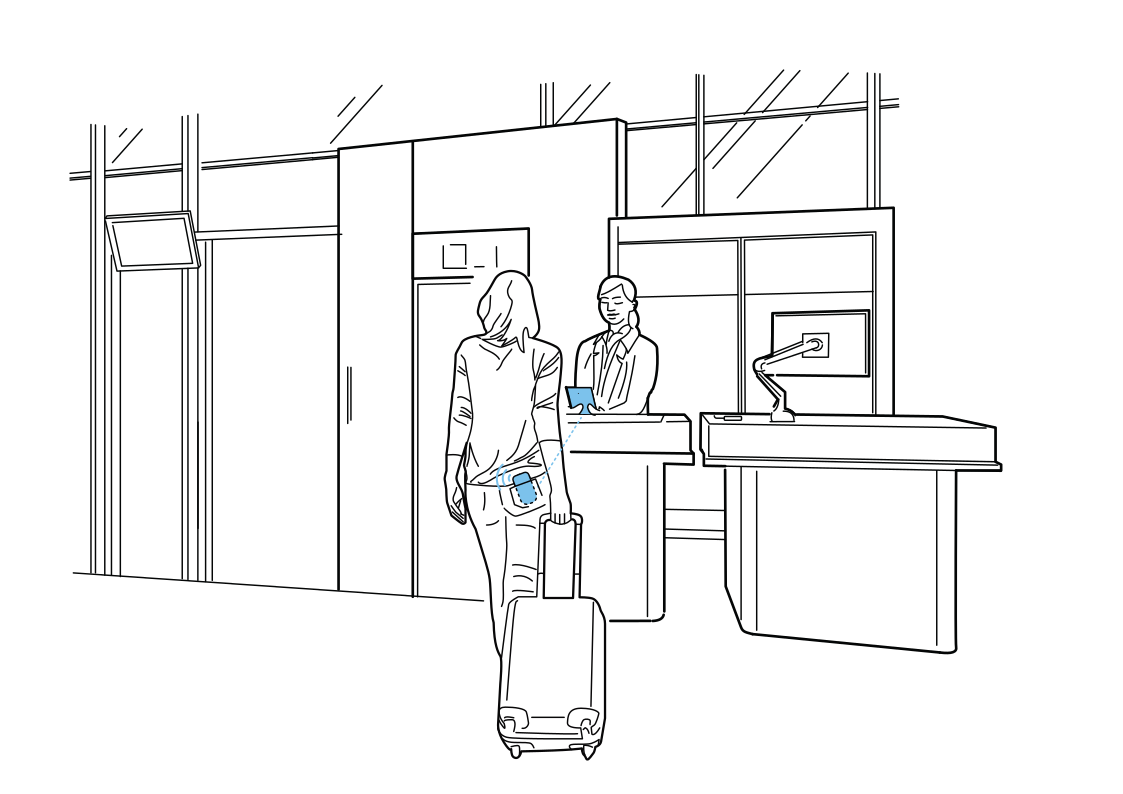 Check in at the right counterRead more
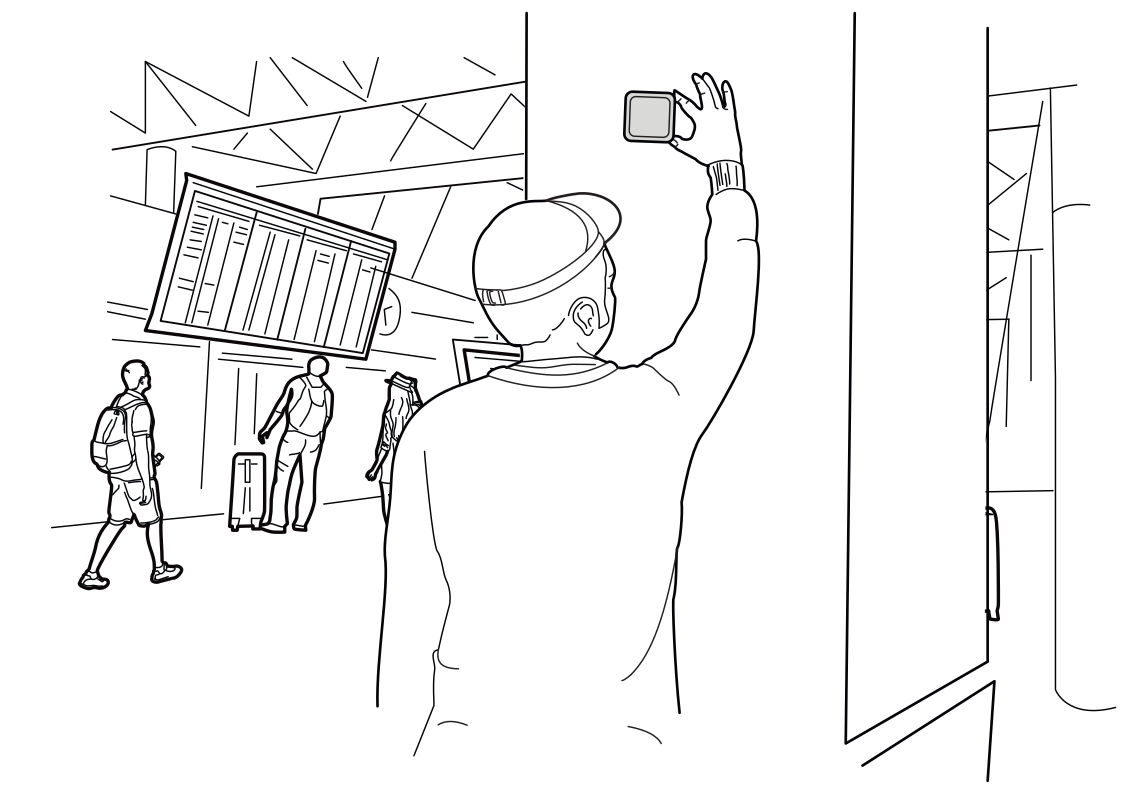 Make terminal landmarks digitalRead more
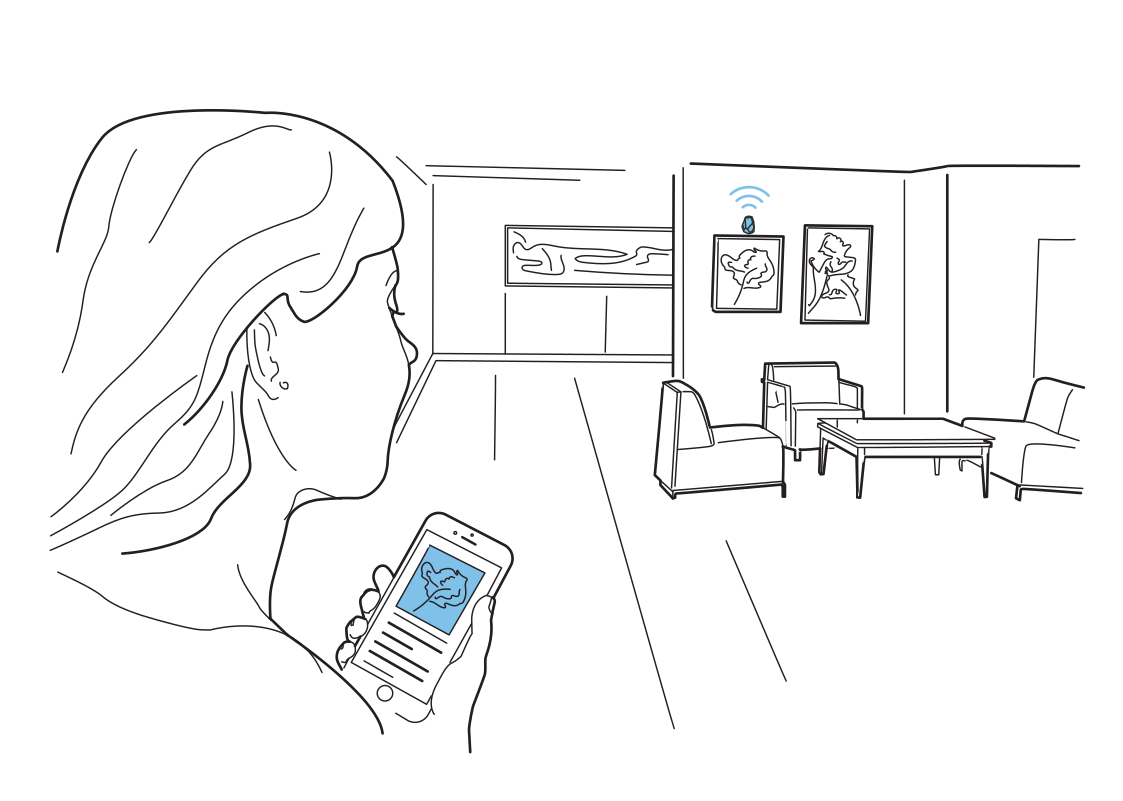 Discover the story on the wallRead more
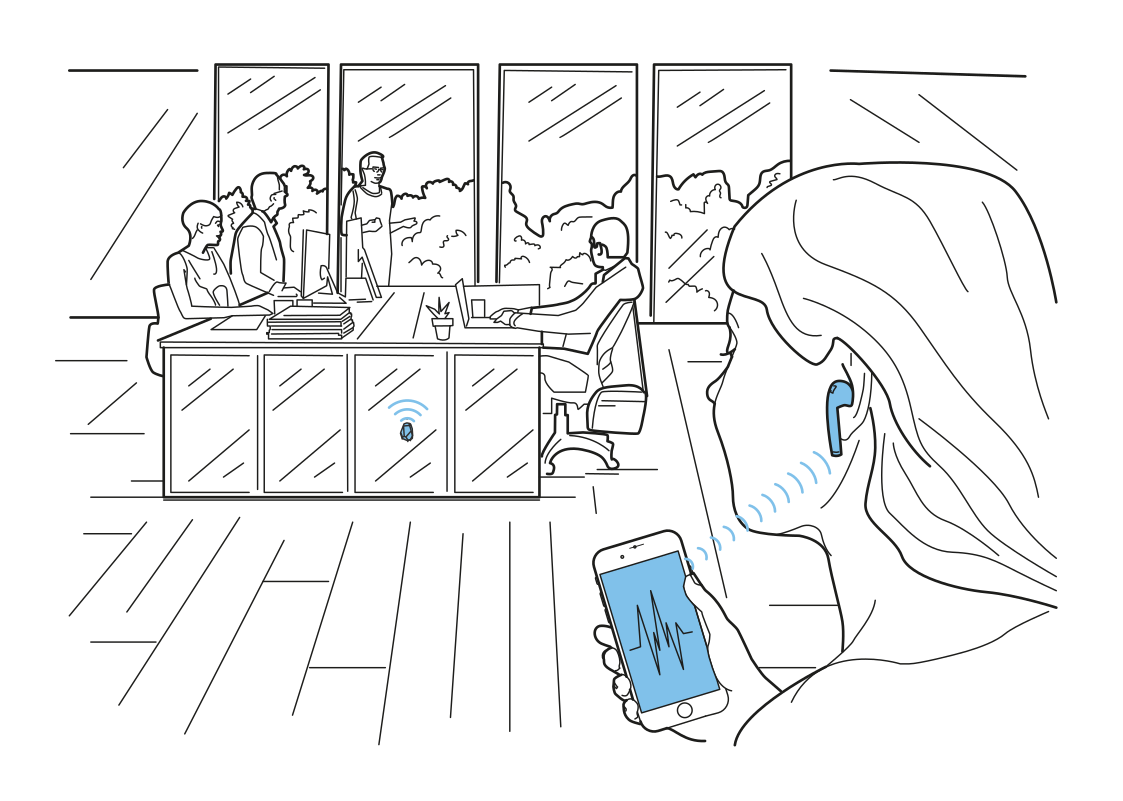 Audio for the space around youRead more
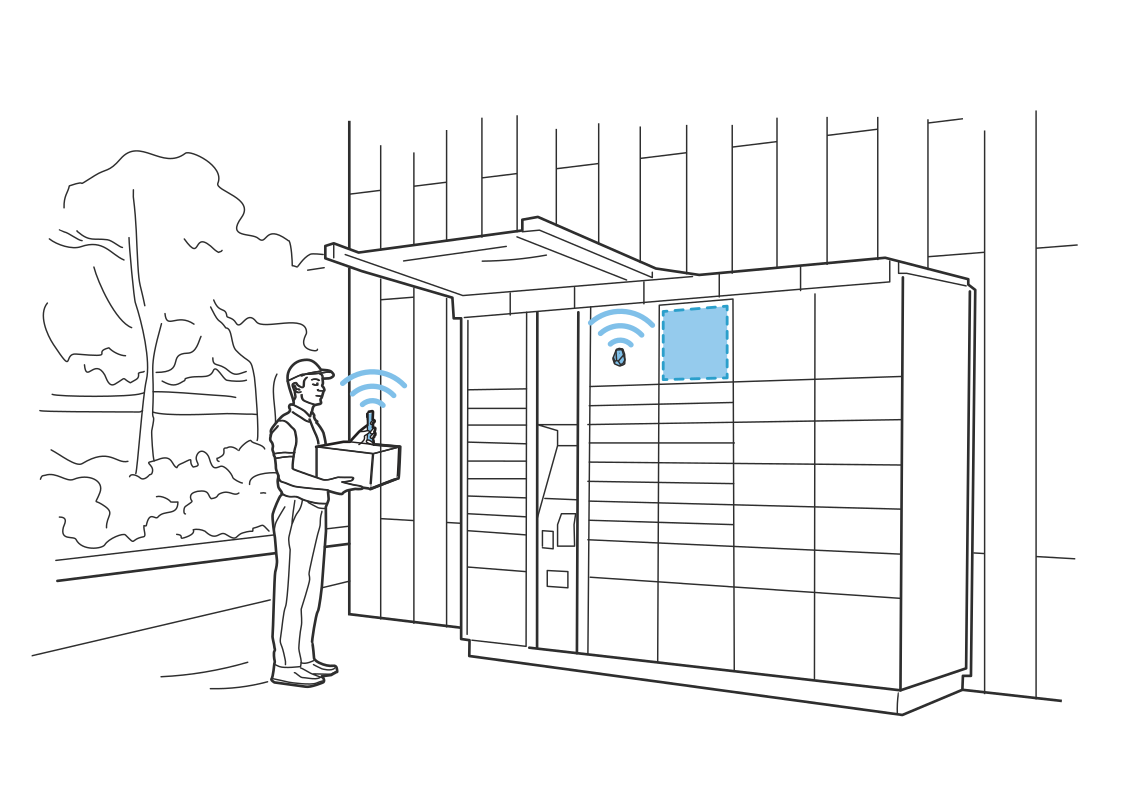 Find the right parcel lockerRead more
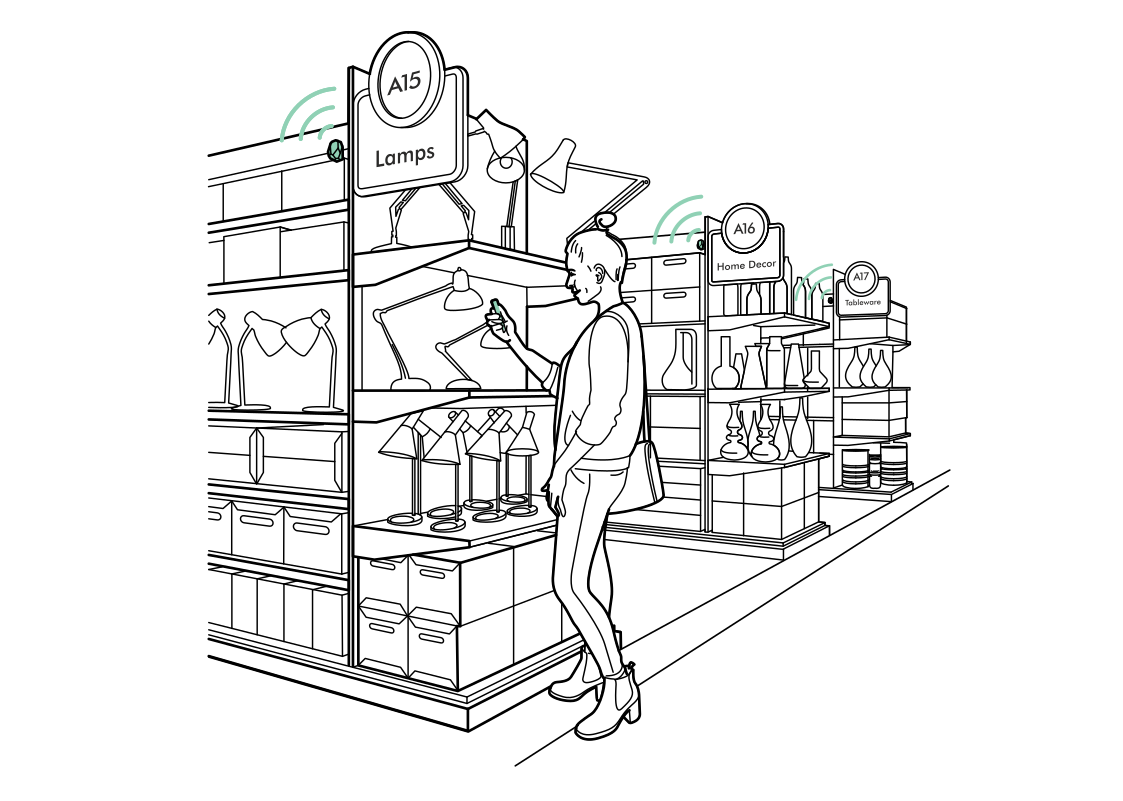 Help shoppers find the aisleRead more
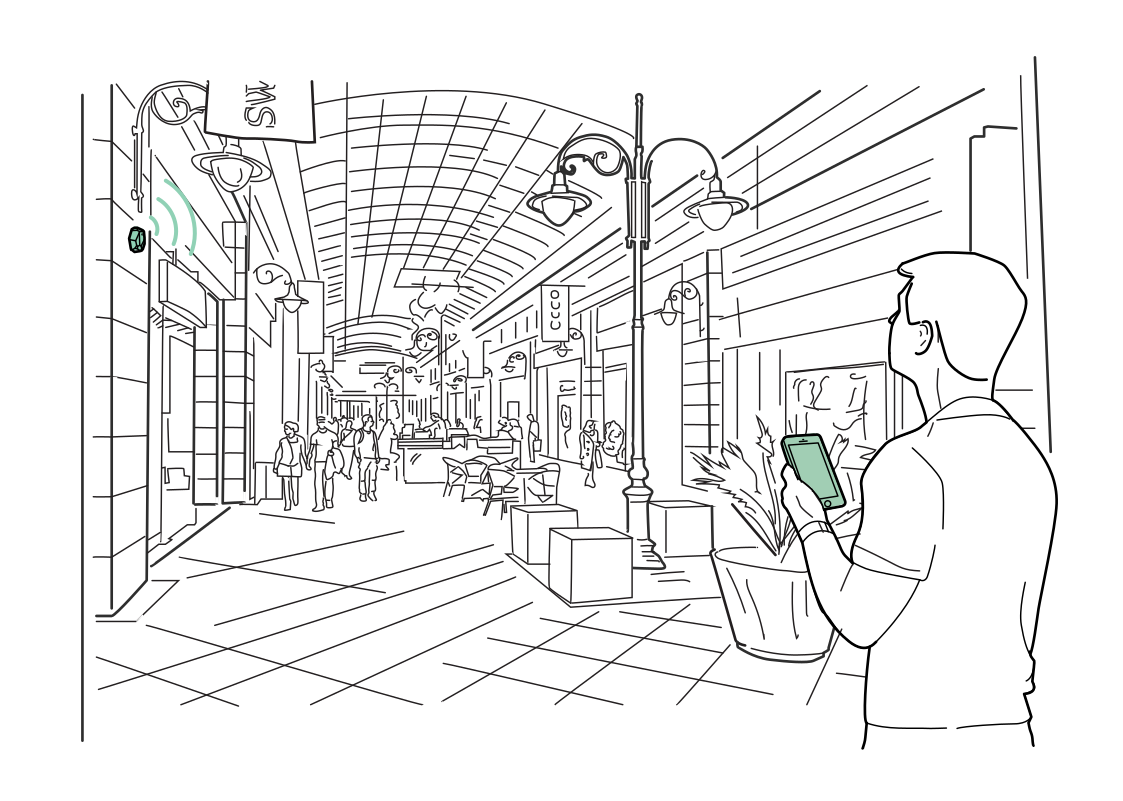 Discover more along the mallRead more
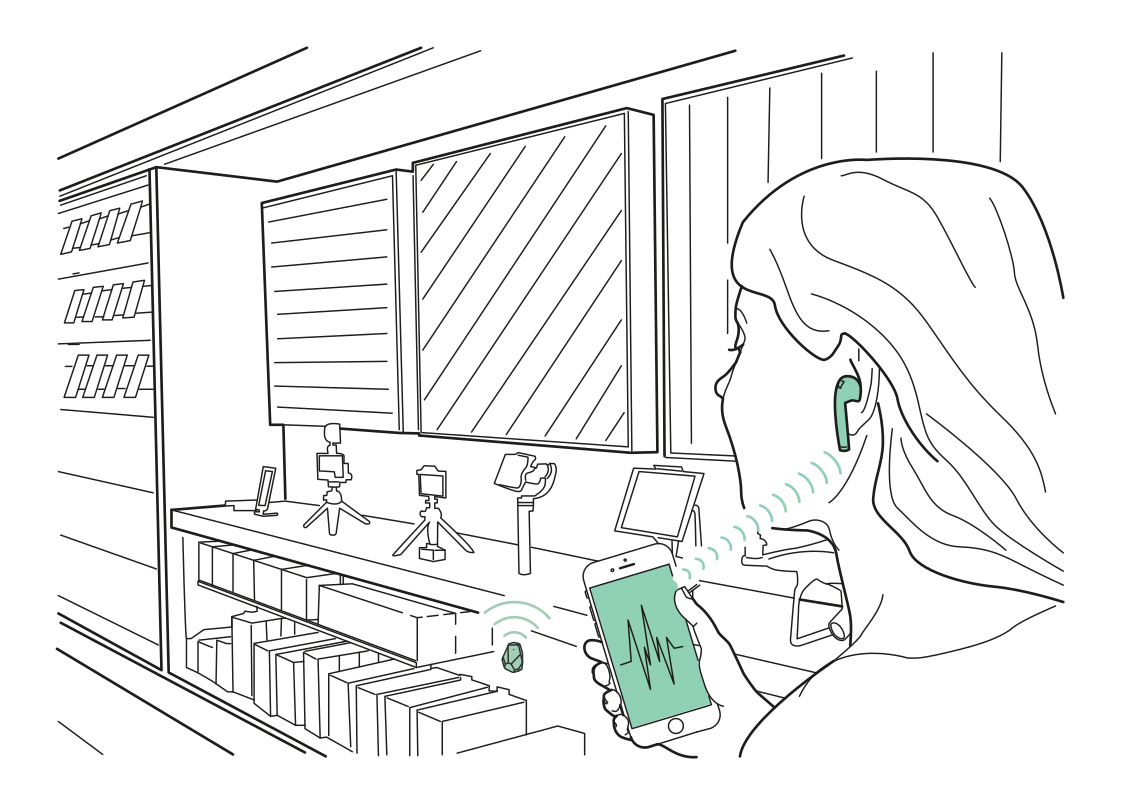 Listen to the product storyRead more
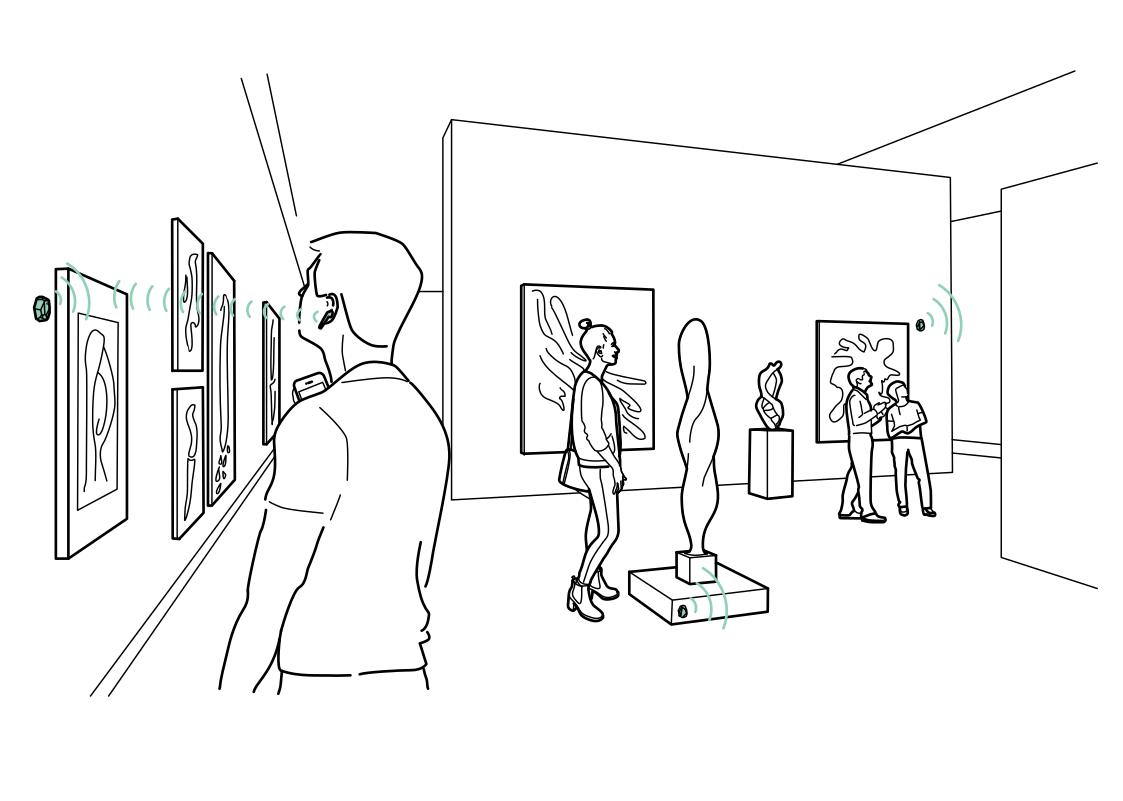 A guide that follows your visitRead more
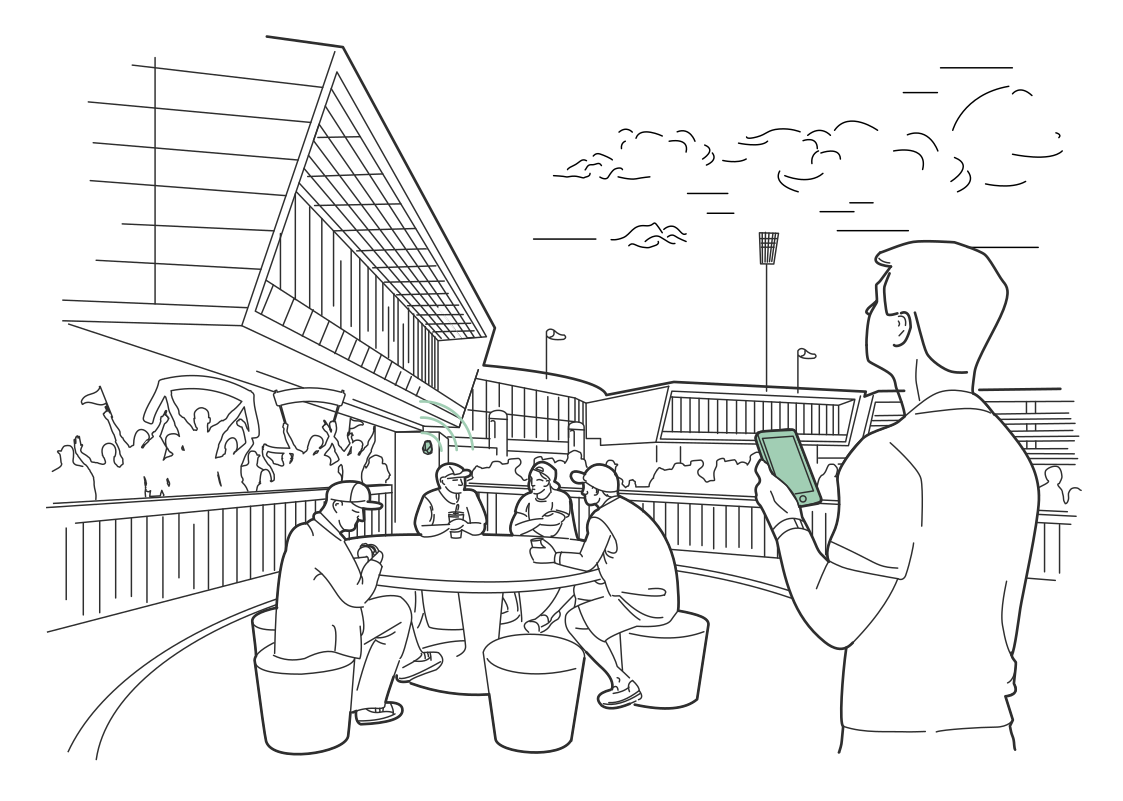 Match-day services nearbyRead more
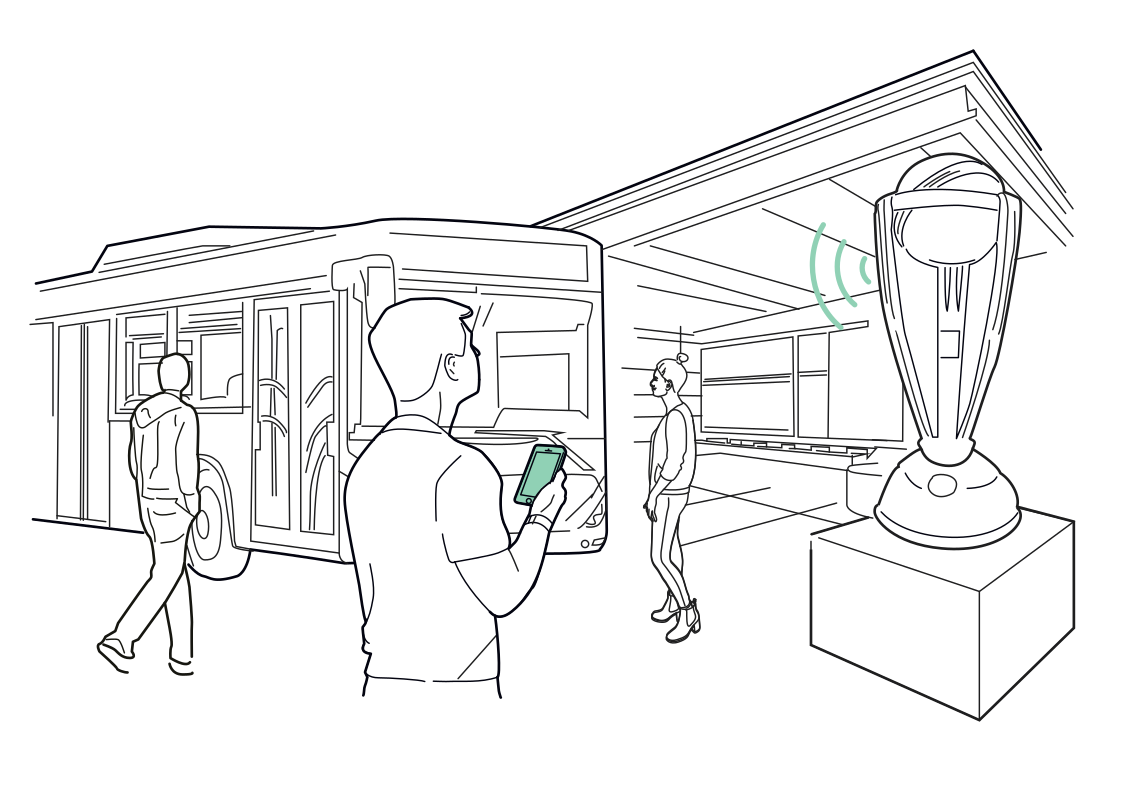 Let the trophy tell its storyRead more
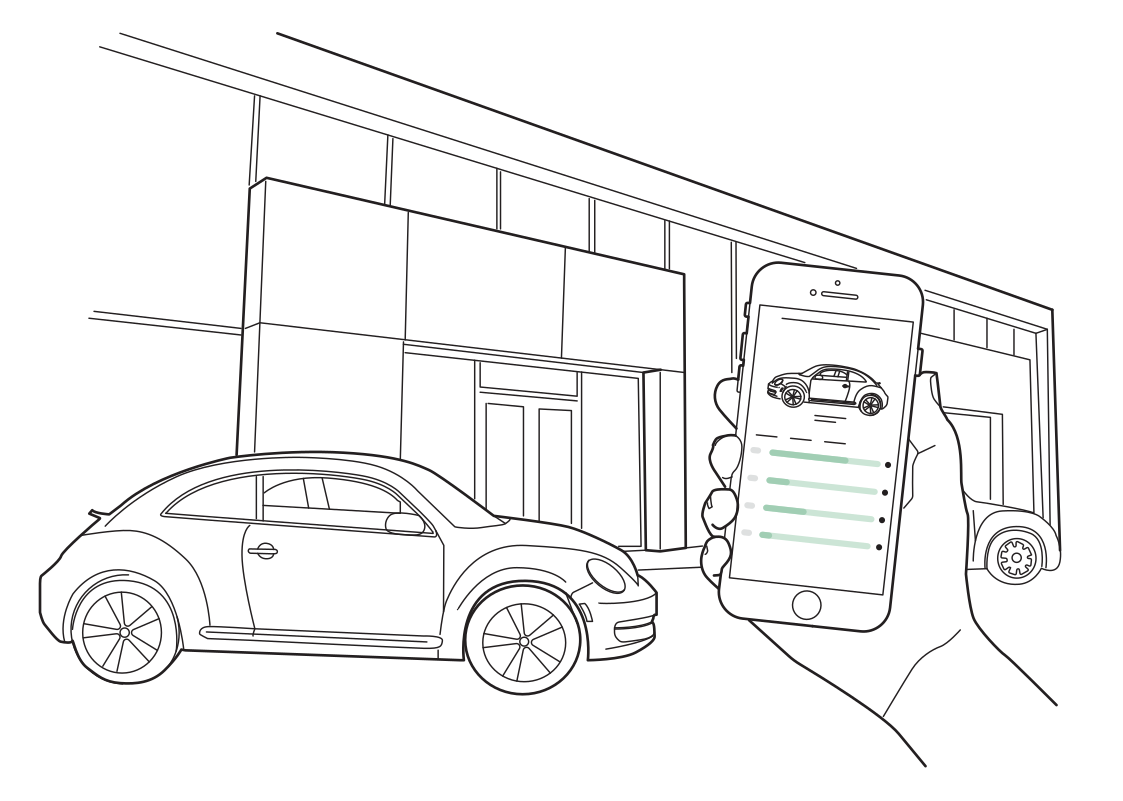 Find the car you bookedRead more
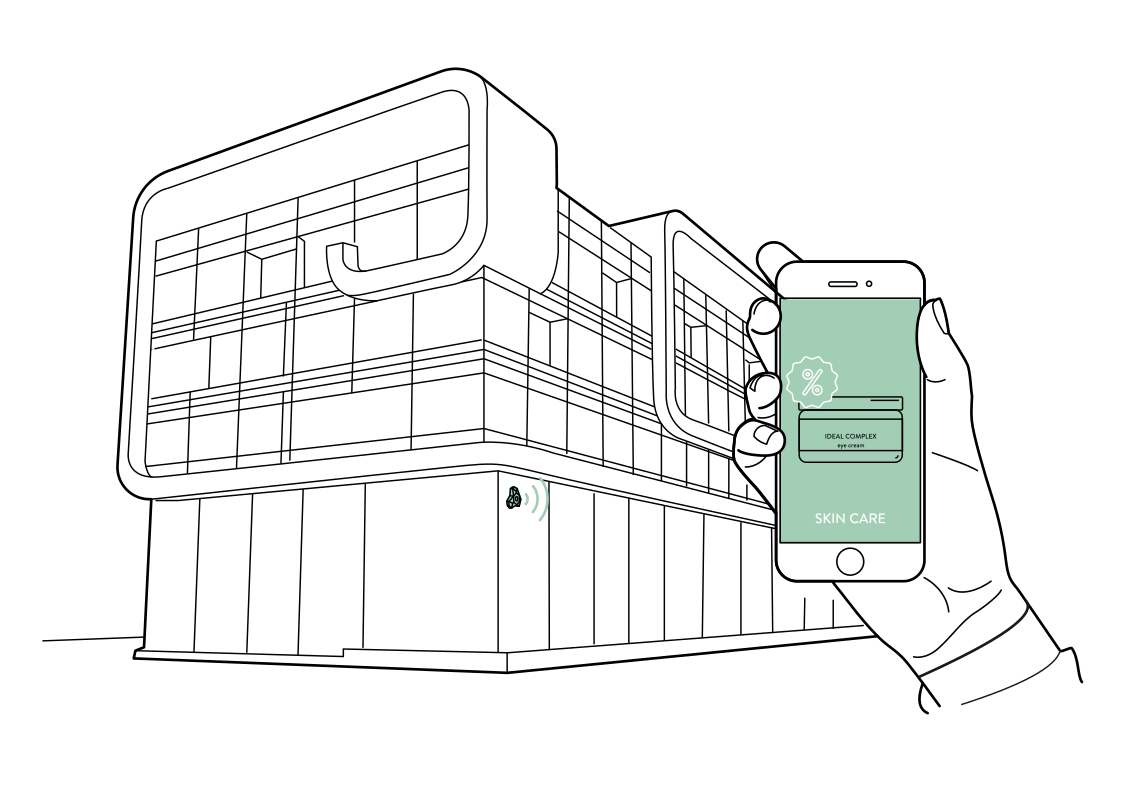 Discover what's inside the storeRead more
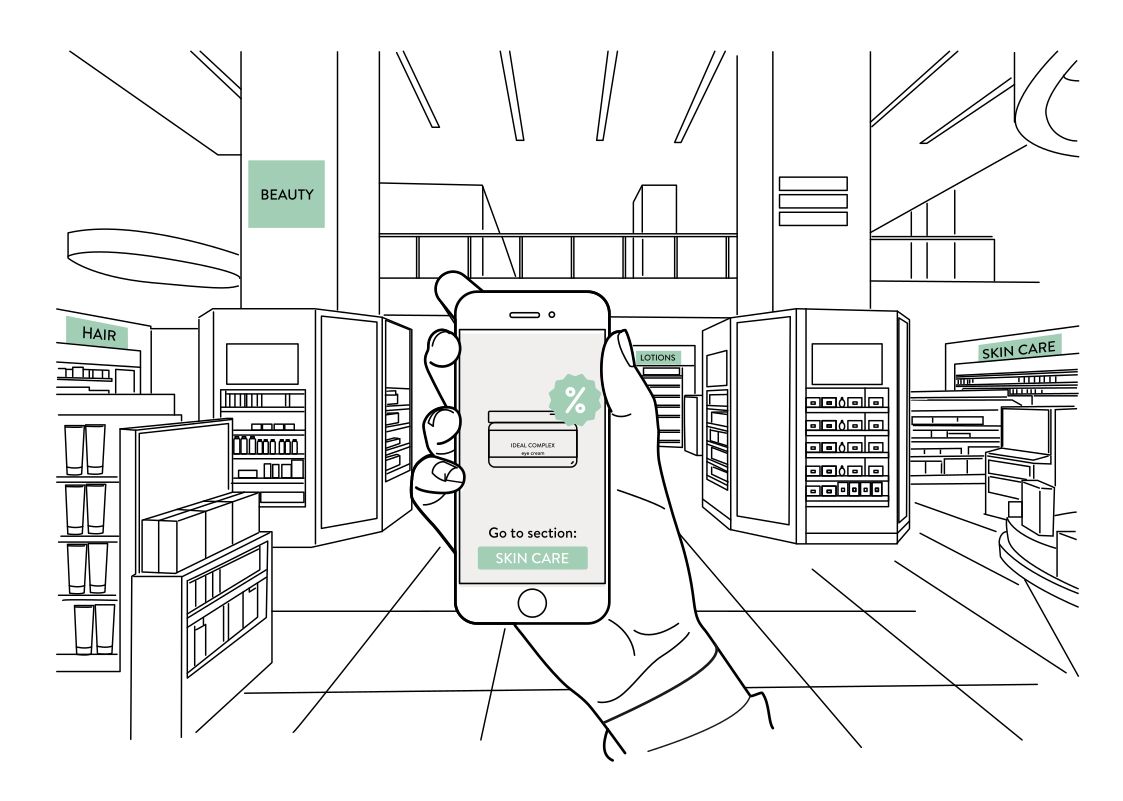 From an offer to the right aisleRead more
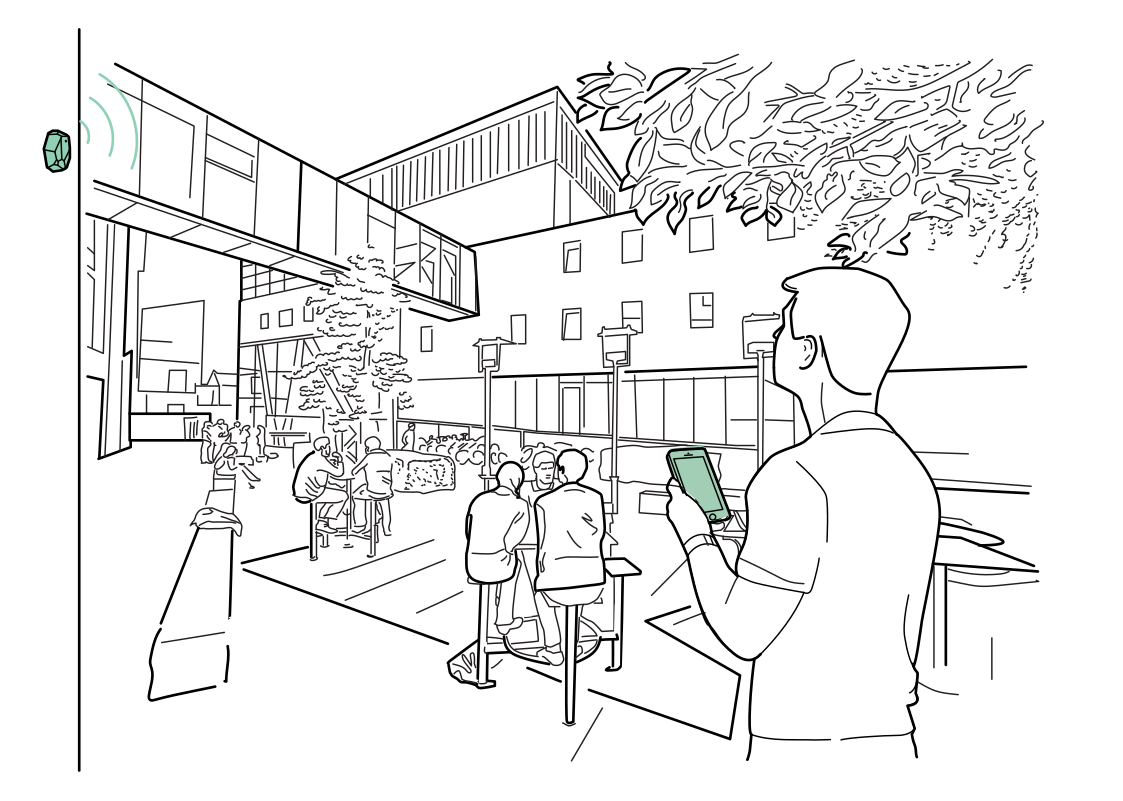 Find services across the venueRead more
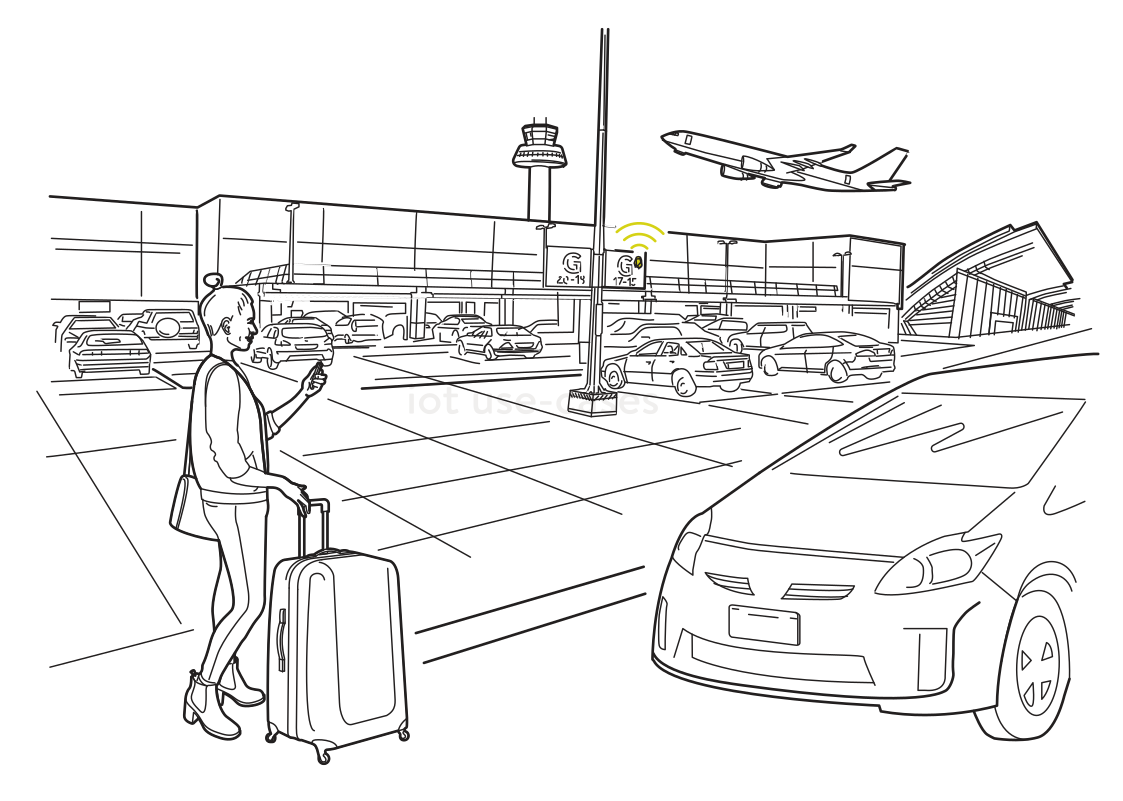 A route back after landingRead more
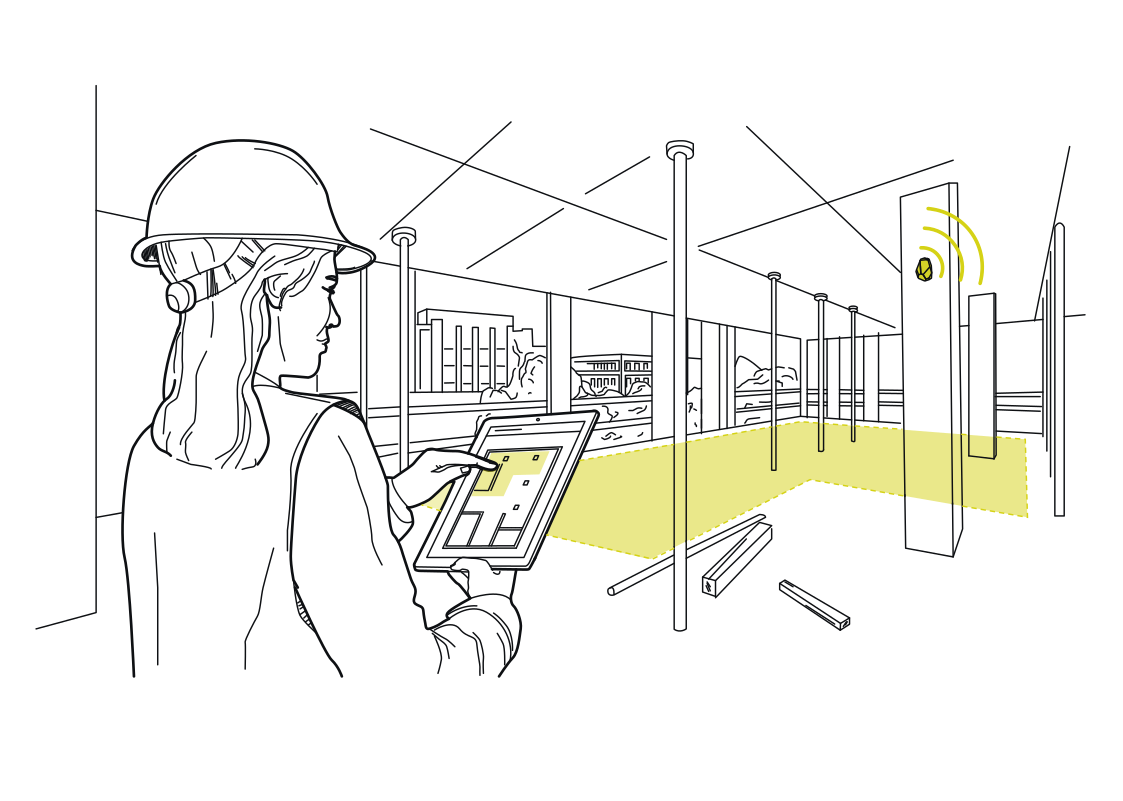 Put work zones on the site mapRead more
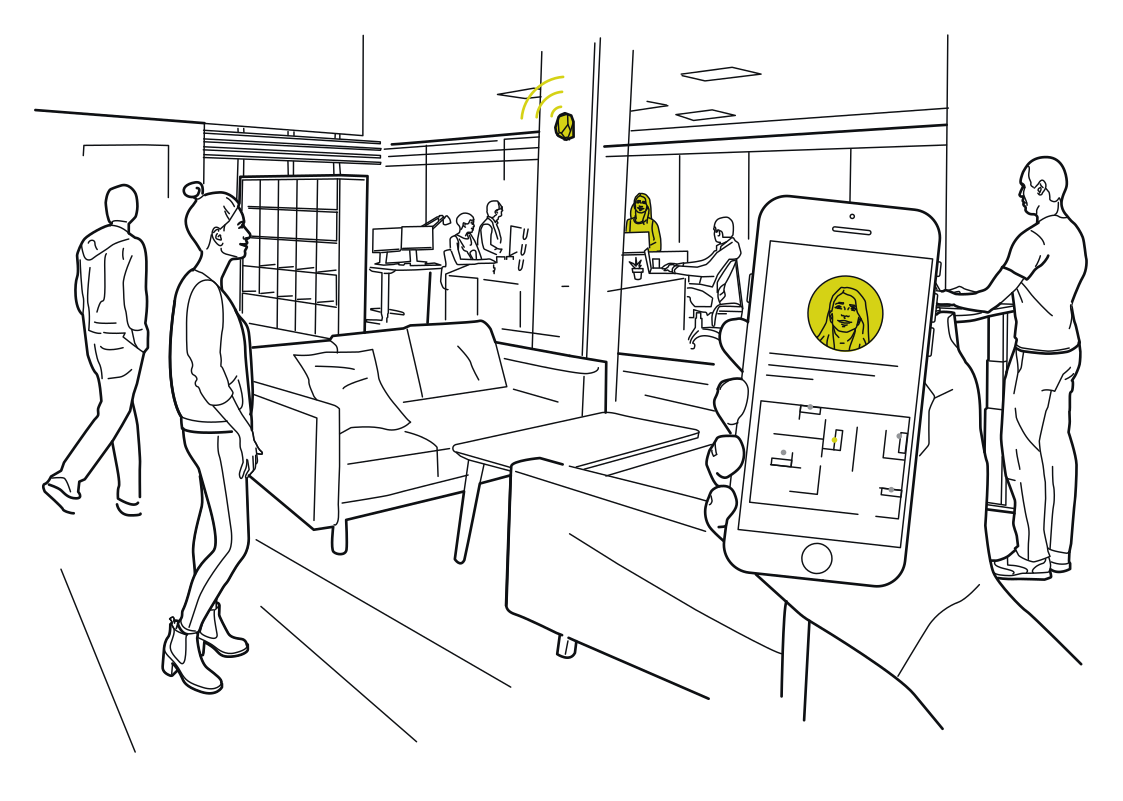 Meet a colleague more easilyRead more
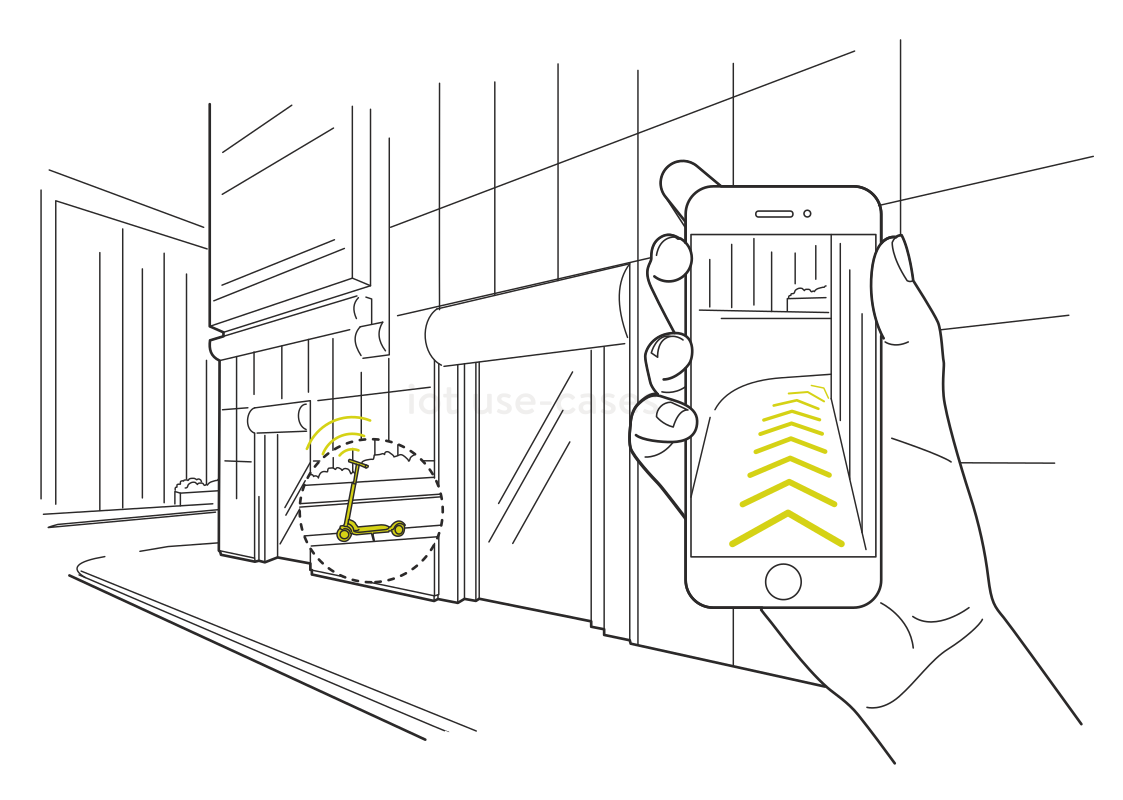 The last few meters to a scooterRead more
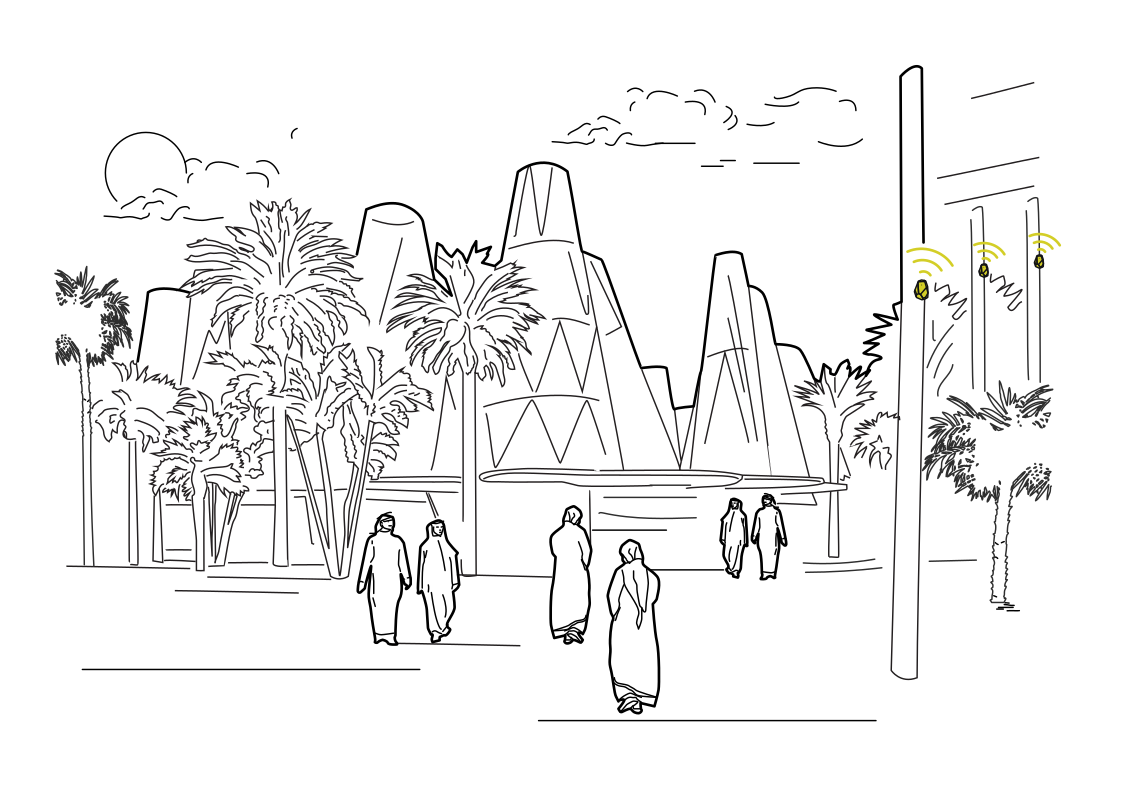 A guide to the places around youRead more
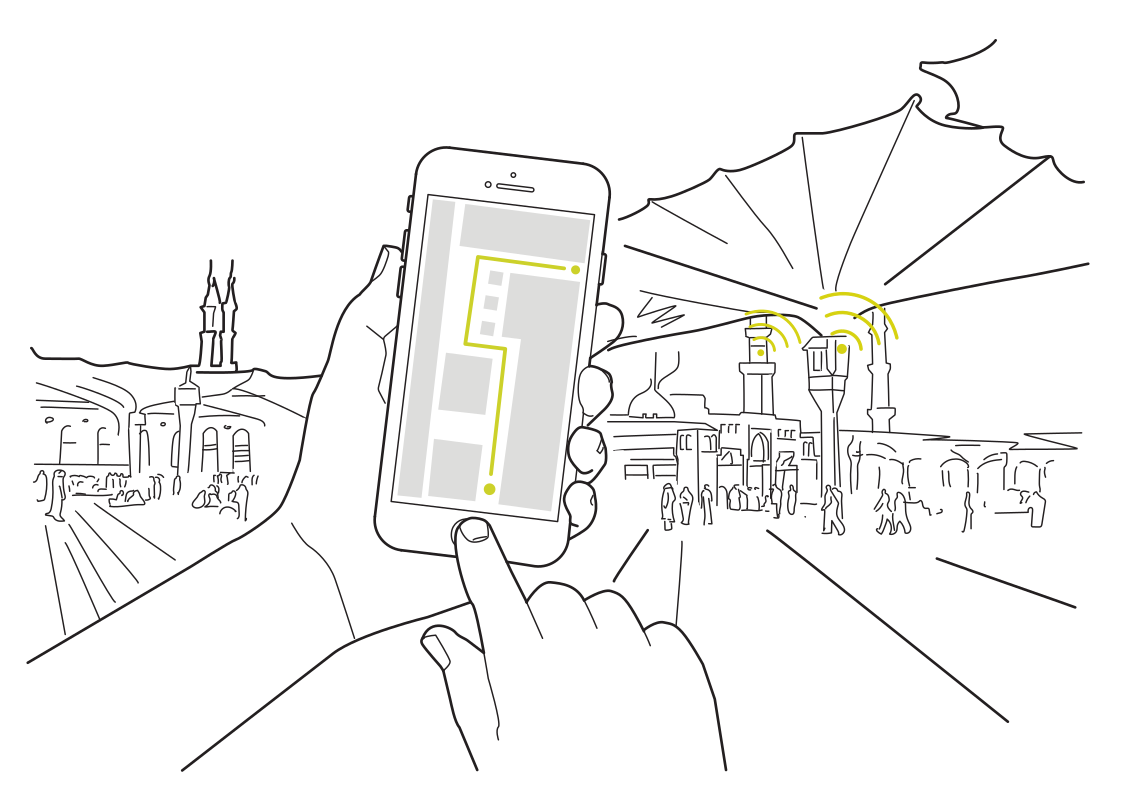 Find the next stop on your day outRead more
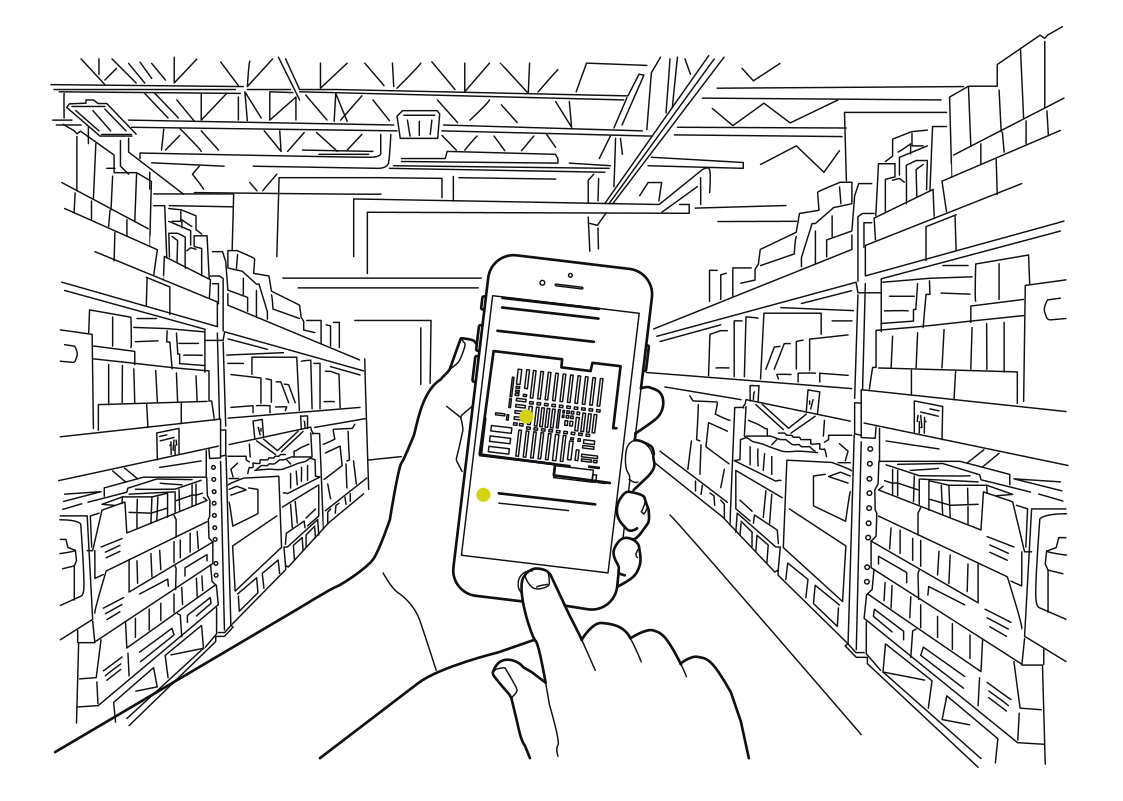 A route through the stockroomRead more
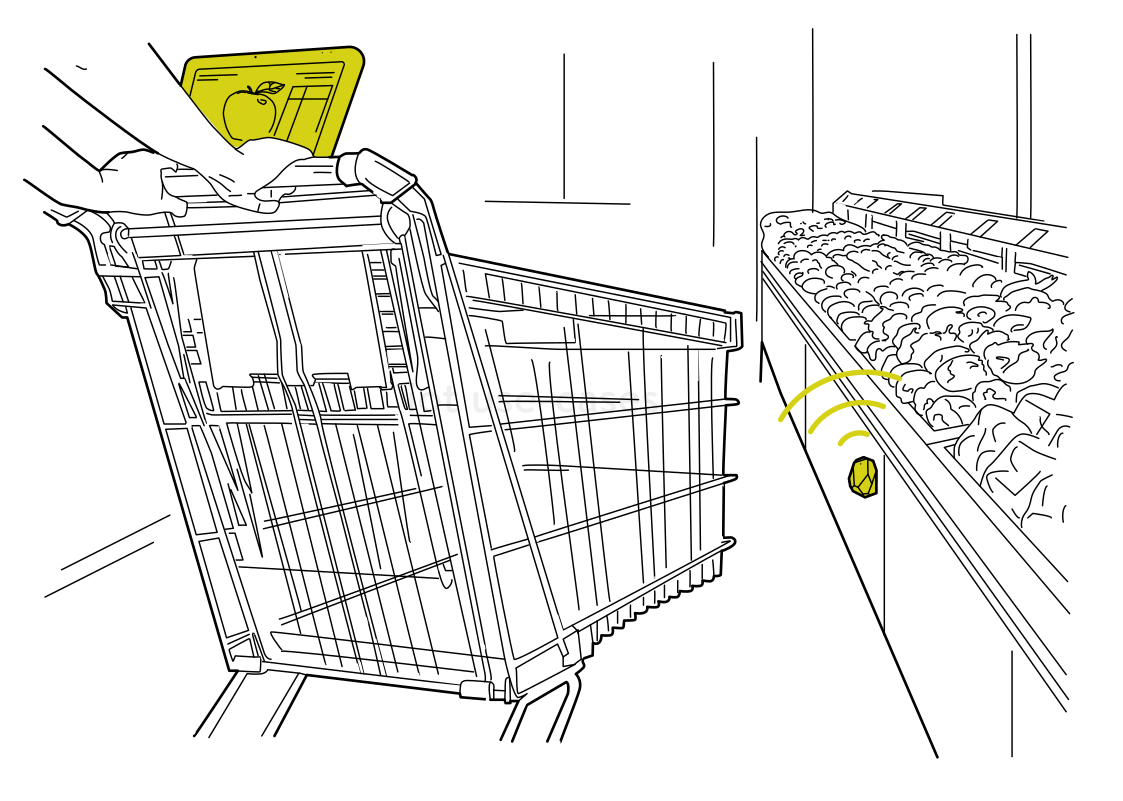 Helpful content on the cartRead more
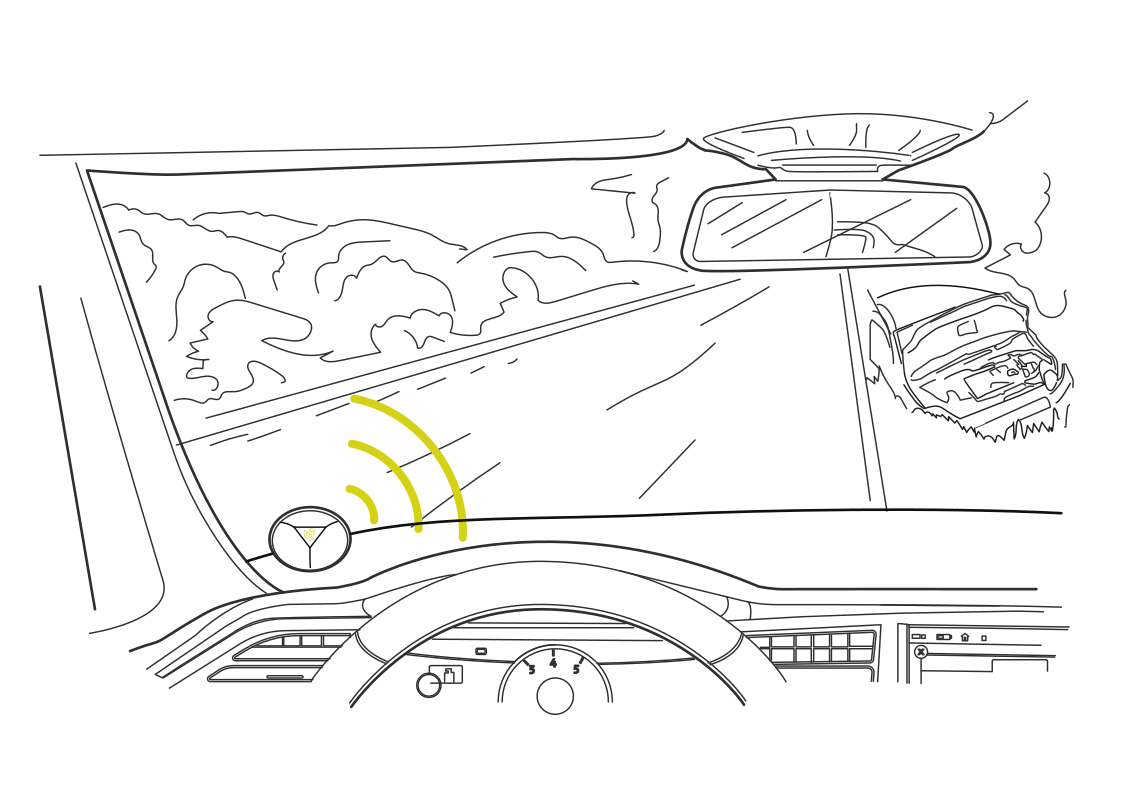 More context around moving vehiclesRead more
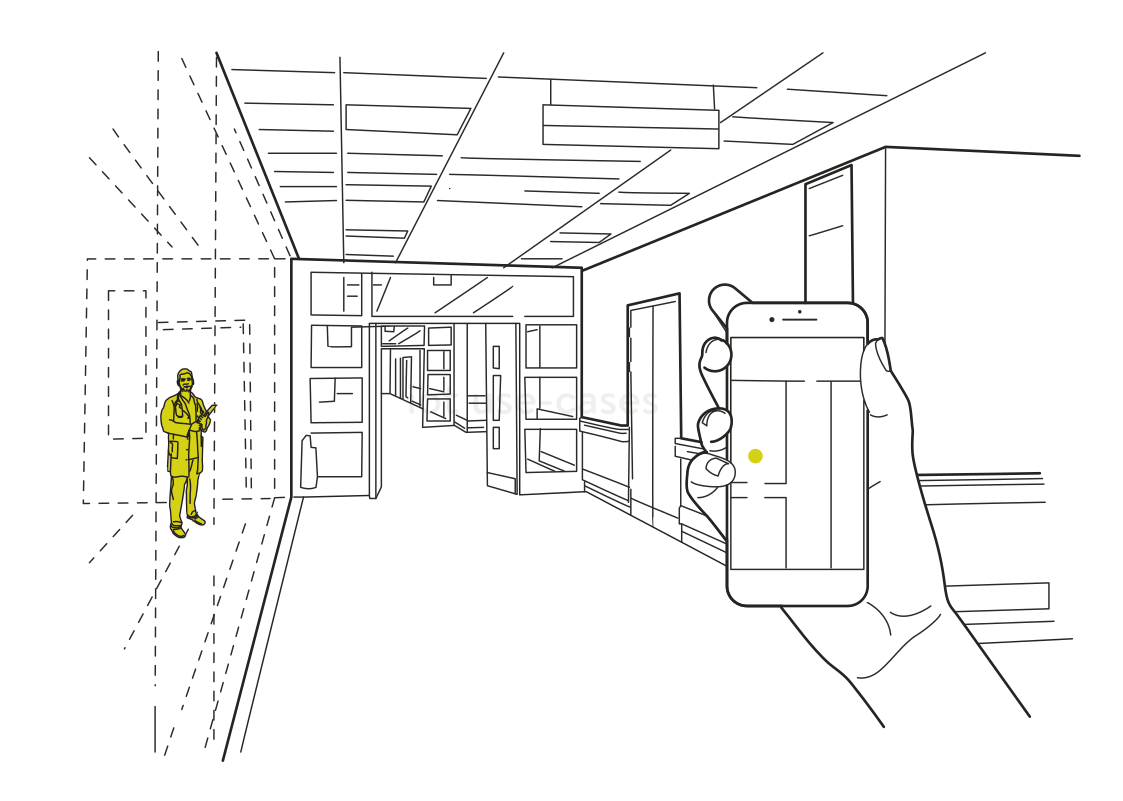 Meet at the right placeRead more
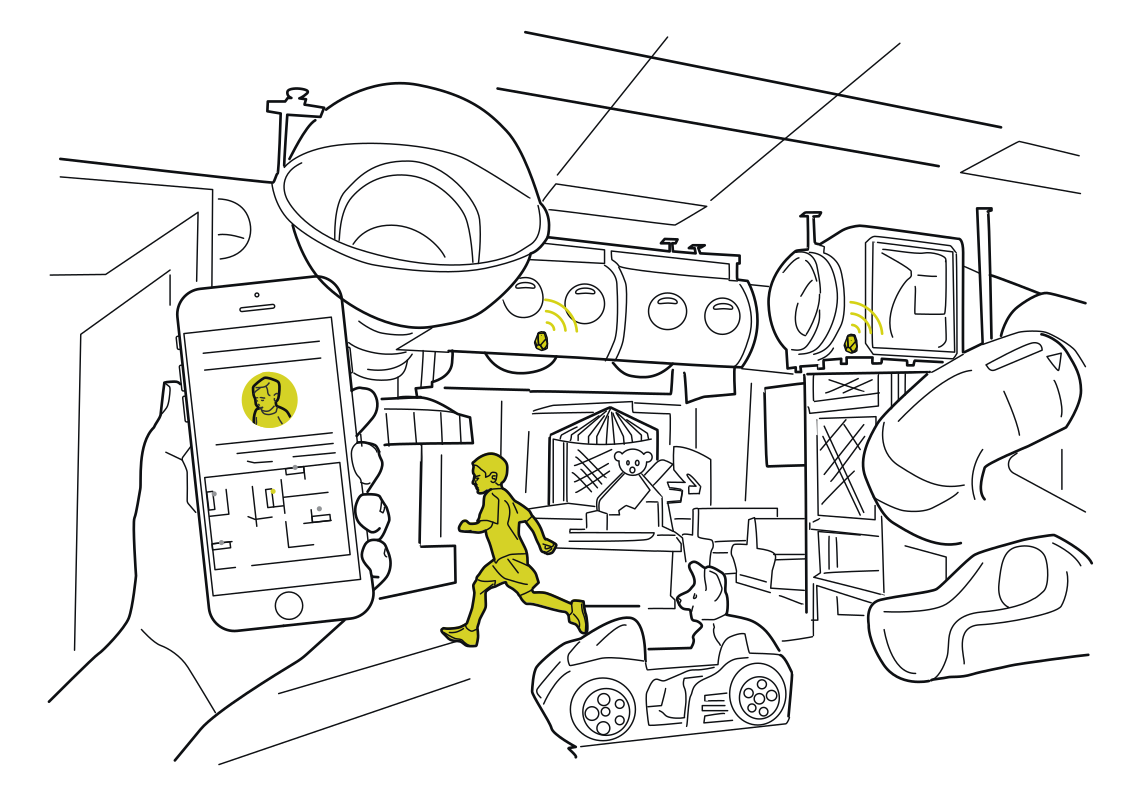 A meeting point in the play areaRead more
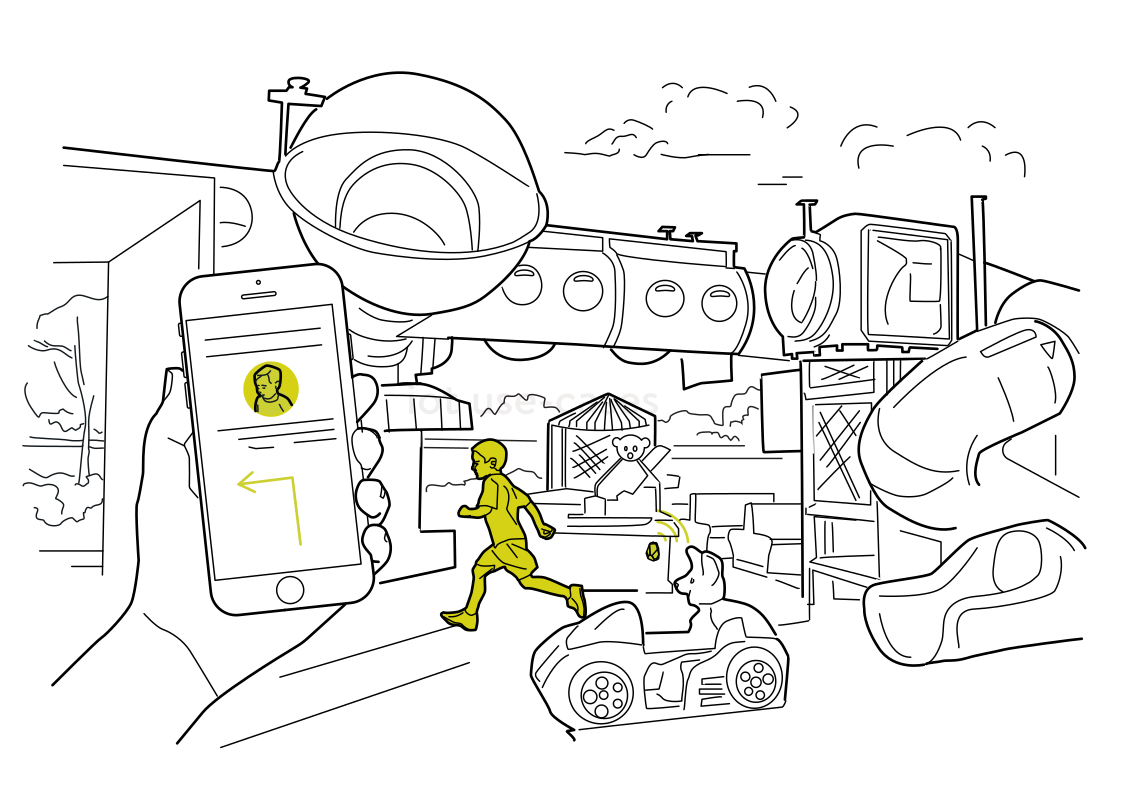 Find the way back togetherRead more
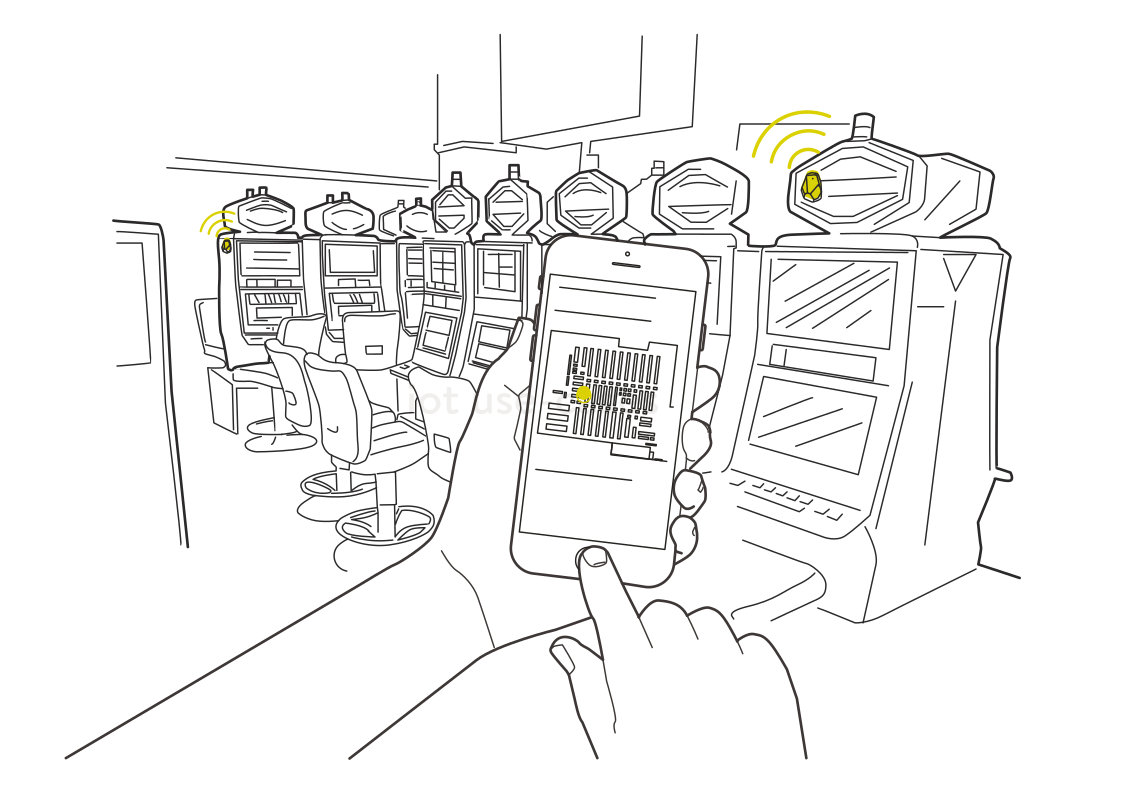 Find a machine or service pointRead more
UWB PRECISE RANGING
In iOS 27, Apple updated the Nearby Interaction API with new methods designed specifically for the Downlink TDoA standard. One of them configures an iPhone to work with nearby DL-TDoA anchors.
It passes the DL-TDoA network ID that the anchors are configured with and an out-of-band (OOB) channel that tells the iPhone whether UWB session and DL-TDoA cluster parameters will arrive over Wi-Fi or Bluetooth Low Energy.
Once you enter the room and the iPhone receives these settings, its UWB chip begins collecting time measurements from nearby anchors. Combined with the anchors’ true coordinates, those measurements let the phone calculate its precise indoor position.
The position can update a blue dot on screen, trigger a location-based notification, or publish coordinates to another system. All computation happens on the phone, but it requires a dedicated app using Nearby Interaction API and location permission granted by the user.

QUICK DEPLOYMENT
All you need is our iOS SDK. It is well documented and has several examples to get you started.
let positioning = try LiveXYPositioningController()

positioning.onPosition = { position in
    mapView.updateUserPosition(
        x: position.xM,
        y: position.yM
    )
}

try positioning.start()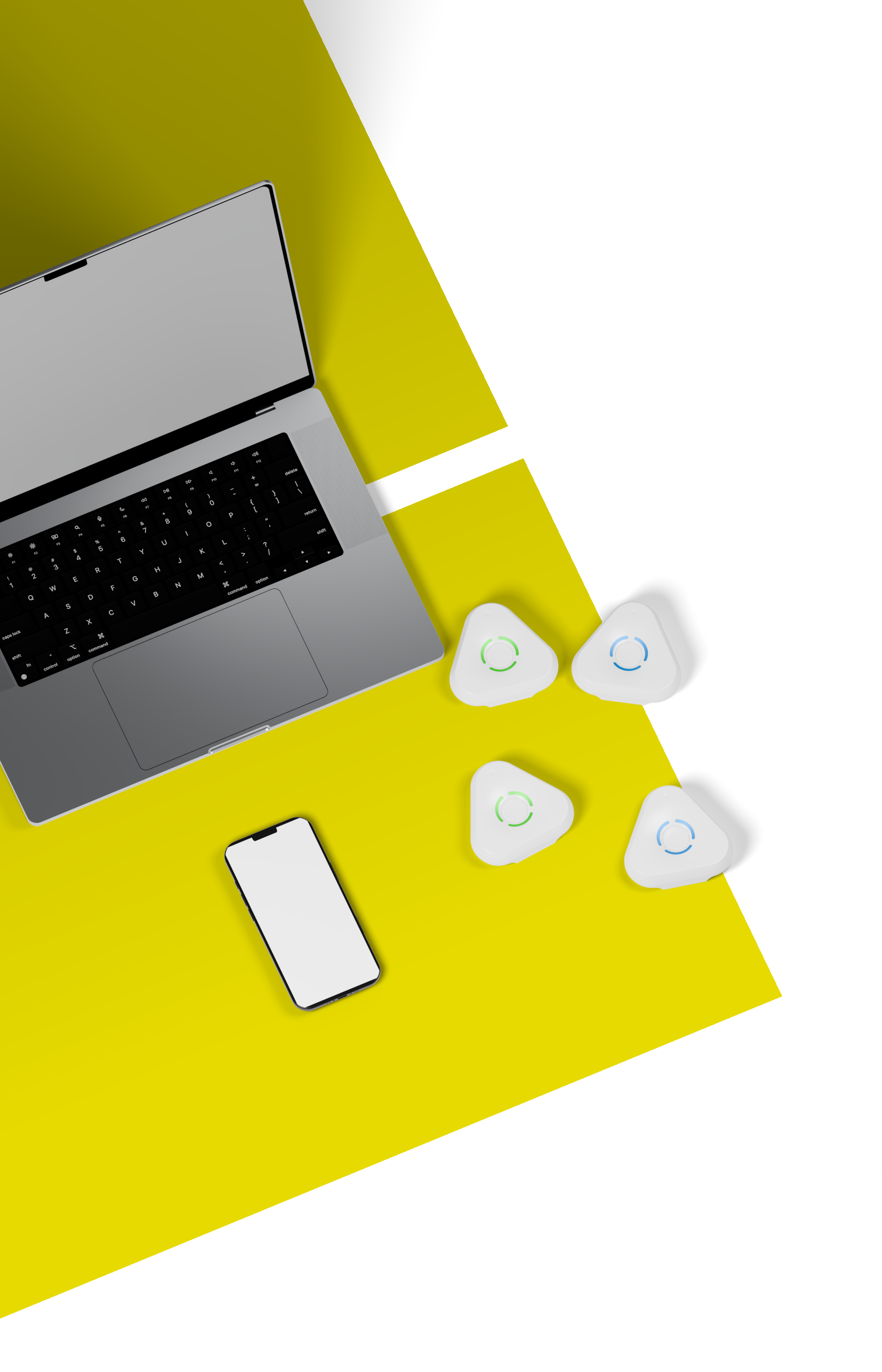
Start by ordering our Dev Kit with four UWB anchors - enough to cover one room and build amazing indoor location demos.
FREQUENTLY ASKED QUESTIONS
DL-TDoA is a standardized UWB method that compatible device makers can adopt. Apple supports it on capable iPhones running iOS 27 or later. Apps should always check the device’s DL-TDoA capability before starting a session.
A typical deployment delivers about 20–30 cm accuracy. Results depend on anchor count, placement, geometry, line of sight, and processing. A carefully designed cluster with additional filtering can improve both accuracy and stability.
Positioning requires at least three anchors: one initiator and two responders. Four or five are recommended because they improve geometry and make it more likely that the phone maintains line of sight in every orientation.
With clear line of sight, a phone may receive anchor signals from 20–30 m away. Four anchors can cover roughly 400 m², although walls, mounting positions, room geometry, and local radio conditions affect coverage.
A dedicated app configures the DL-TDoA session, receives anchor measurements, and calculates the phone’s position. Users must install it and grant the required permissions before the space can provide location-aware experiences.
Requirements depend on the operating system and device. Typically, the app needs location permission and may use Bluetooth or Wi-Fi to discover the anchor network and receive the out-of-band configuration needed to begin ranging.
Privacy is built into the architecture. The phone listens passively and calculates its position locally, while anchors do not know which phones are nearby. Location leaves the phone only when the user permits sharing or storage.
There is no practical user limit created by the anchors. Phones only listen to the same broadcast signals, so hundreds or thousands of devices can use one cluster simultaneously without opening individual ranging connections to it.
Fixed installations should remain powered because anchors continuously synchronize and listen for timing signals. Development Kit anchors include batteries for short demonstrations, but permanent battery operation would be impractical.
Anchors use low-voltage power and do not need a dedicated high-voltage circuit. They can be supplied through standard 5 V USB-C or Power over Ethernet, depending on the installation and selected network accessories.
Update speed is configurable. A typical setup provides 5-10 position updates per second.
That depends on the operating system and its Nearby Interaction APIs. On supported iPhones, an app can continue ranging in the background through a Live Activity when the user has granted the necessary permission.
DL-TDoA generally uses much less energy than GPS or an AR session. Consumption depends on how often the app activates UWB and processes measurements. Apps that request position only when needed use especially little power.
Any compatible device with a UWB radio and DL-TDoA support can use the infrastructure. Robots can navigate indoors, drones can obtain low-latency positioning, and smart glasses can add location-aware context.
No meaningful interference is expected. UWB transmits across a different wide spectrum at extremely low regulated power, close to the radio noise floor, so it can operate alongside common Wi-Fi, Bluetooth, and cellular equipment.
UWB is a regulated, consumer-grade radio technology already used in phones and tags, with very low transmit power. People with pacemakers or during pregnancy should follow the same expert guidance used for standard consumer phones.
Not by the anchors. Position is calculated on the phone and is stored or transmitted only if the installed app implements that feature and the user permits it. Users can revoke permission or remove the app.
In DL-TDoA mode, anchors only transmit navigation signals and have no cameras or microphones. Compatible hardware can enable radar sensing, but it still does not capture faces, voices, or visual recordings.
Wi-Fi and Bluetooth support setup, management, firmware updates, and out-of-band discovery of the DL-TDoA network. When radar mode is enabled, Wi-Fi can also stream sensor data to a configured server or MQTT broker.
Mounting and powering one anchor can take only a few minutes. A complete network usually takes a few hours, with most of that time spent physically placing devices on walls or ceilings and checking their configuration.
Wi-Fi and Bluetooth connectivity allow anchor firmware to be updated over the air. Deployed systems can receive configuration improvements, product updates, and support for compatible evolutions of the underlying standards.
UWB is a standardized consumer radio technology and can be deployed in many countries. Availability still depends on local radio regulations, certifications, and import controls, so each target market should be confirmed before rollout.
Common uses include indoor navigation, audio guides, workplace wayfinding, asset finding, and location-based notifications. Precise position can power contextual experiences in offices, hospitals, venues, retail, and transport.
The hardware can support direct two-way ranging with dedicated firmware. It is useful for selected applications, but unlike broadcast DL-TDoA, each anchor can maintain only a limited number of simultaneous active ranging sessions.
Compatible anchors can transmit DL-TDoA messages while collecting radar channel impulse responses. One hardware infrastructure can therefore support precise device positioning and privacy-friendly passive sensing.
Estimote provides the hardware, software, and deployment services needed to operate the system in a physical space. Trained partners can also assist with installation, configuration, integration, and rollout.
Shared live locations need a server so paths and users can appear on a dashboard. You can build and host the backend with our APIs or use SpaceTimeOS as the managed location-intelligence platform.



Estimote, Inc. was founded in 2012 by Jakub and Lukasz with a bold vision and a passion for creating an operating system for the physical world.
After graduating from Y Combinator in 2013, Estimote launched its first-generation indoor location products based on Bluetooth and iBeacon. Their iconic design captured developers’ imaginations, opening the door to experiments with micro-location and contextual computing.
Estimote went on to deploy millions of sensors and tags worldwide, powering the largest commercial deployment of location technology at the time. Years of working across real spaces and operations gave the team firsthand knowledge that shaped every generation to follow, including LTE Wearables and more precise UWB positioning.
In 2022, Estimote introduced the first version of SpaceTimeOS, bringing its original vision to life: making the physical world software-defined and programmable. Developers can build apps and automations directly on physical spaces to improve safety and productivity and deliver delightful experiences that feel like magic.
Today, Estimote is extending that vision with a new release of SpaceTimeOS and is first to offer Downlink TDoA Anchors for precise, privacy-friendly indoor positioning, alongside UWB Radar for sensing presence and movement.
With Estimote, you get the latest tech backed by more than a decade of practical experience and a clear vision for what comes next.
